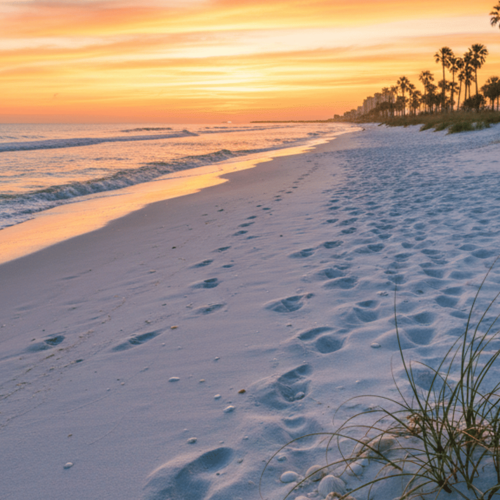

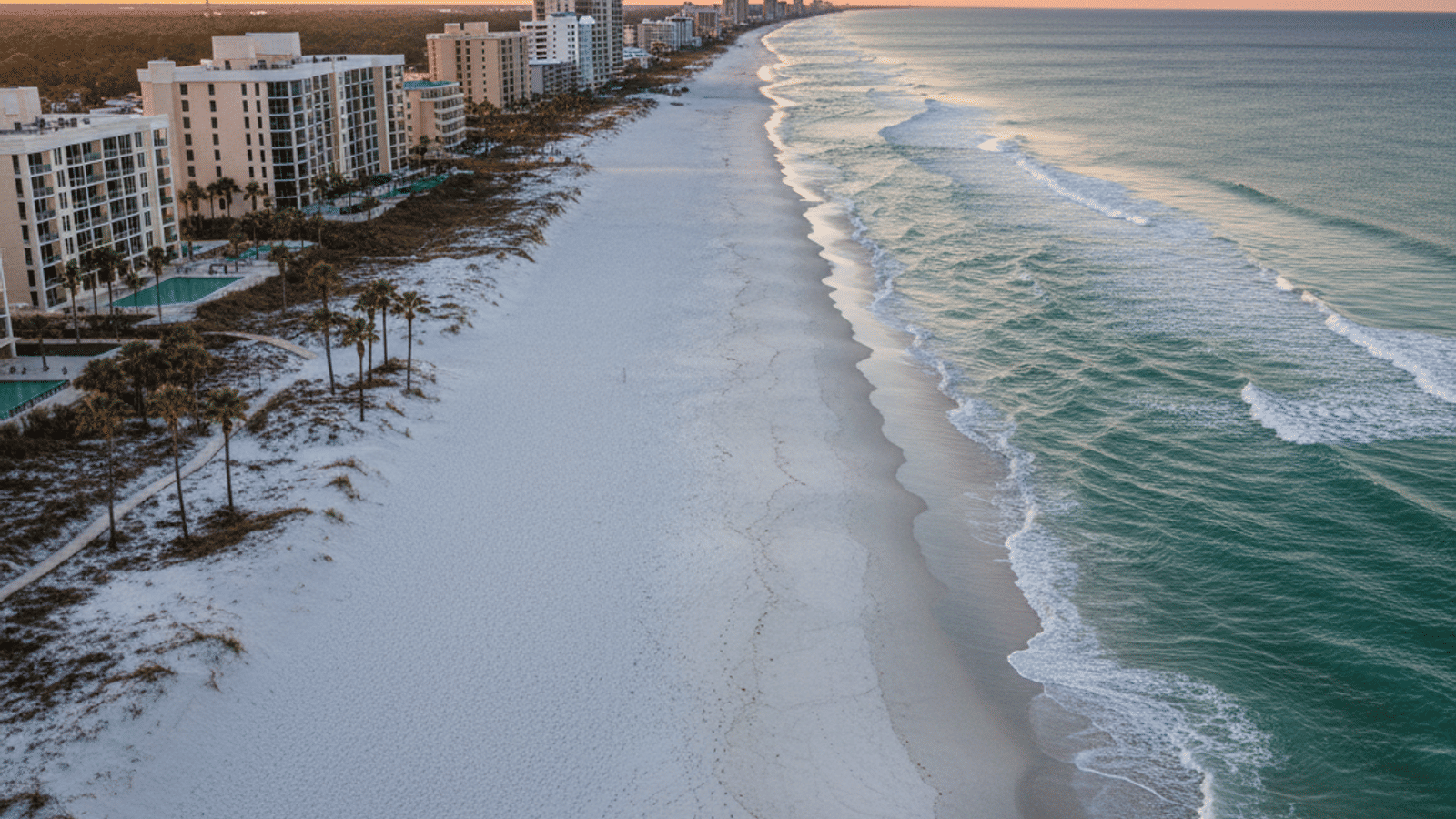
If you’ve visited us during the summer, you know the Emerald Coast magic: the sugar-white sand, the turquoise water, and the energy of Pier Park. But moving to Panama City Beach (PCB) full-time is a different ballgame than visiting for a week.
First, let’s clear up the biggest confusion for newcomers: "The Beach" and "Town" are two different worlds. Panama City Beach is the coastal strip on the Gulf. Panama City is the mainland municipality across the Hathaway Bridge. They have different governments, different vibes, and drastically different real estate markets.
As we settle into 2026, the area has shifted from a post-hurricane recovery mode into a period of rapid residential growth. While the daily sunsets never get old, living here means navigating seasonal traffic spikes and a complex insurance market. If you are looking for a permanent address in paradise, here is the honest, on-the-ground reality of calling PCB home.
Cost of Living in Panama City Beach (2026 Update)
When people look at the cost of living in Panama City Beach 2026, they often see a mixed bag. Generally, our day-to-day expenses—groceries, utilities, and services—hover near national averages. However, housing and insurance create a unique financial landscape.
The biggest financial perk, hands down, is that Florida has no state income tax. If you are moving from a high-tax state, that instant raise in your paycheck often helps offset the higher costs of owning a coastal home. It’s one of the primary reasons we see so many remote workers and retirees flocking here.
However, housing prices have held steady. You can expect median home prices in PCB to often hover around the $400,000 to $500,000 range, though condos and luxury waterfront estates will skew that number significantly higher. The real wild card in your monthly budget won't be the mortgage principal, but the escrow account for insurance.
- Housing: Prices remain higher than the inland national average due to demand.
- Taxes: No state income tax; property taxes generally run about 1% to 1.5% of assessed value.
- Utilities: AC bills in August are high, but mild winters balance the yearly average.
- The "Hidden" Cost: Wind and flood insurance are non-negotiable budget items here.
The Insurance Reality: What You Must Know
If we were sitting down for coffee, this is the part where I’d tell you to pay the most attention. Moving to Panama City Beach advice always starts with insurance. In 2026, securing coverage is about more than just finding a quote; it’s about understanding the specific risks of your parcel.
You will likely need two, and possibly three, separate policies: homeowners (fire/theft), windstorm, and flood. Wind and flood are rarely bundled together. Even if you aren't in a high-risk flood zone (often labeled "AE" zones), flood insurance is incredibly smart to have. Nature doesn't always read the flood maps, and storm surge is a real factor.
Premiums have stabilized somewhat compared to the spikes of a few years ago, but they are still a shock to newcomers. Annual costs can range from $3,000 to over $8,000 depending on the age of the roof and elevation.
To keep these costs down, look for homes with "Wind Mitigation" features. Things like hip roofs (sloped on all sides), hurricane clips, and impact windows can save you thousands per year. Always ask for a wind mitigation report before you make an offer.
Best Neighborhoods in PCB for Full-Time Living
When you live here, you generally want to be away from the short-term rentals. You don't want to live next door to a different bachelorette party every weekend. The best neighborhoods in Panama City Beach for locals are the ones with HOAs that restrict rentals to 6 months or longer, ensuring a stable community feel.
Here are a few areas where the locals actually live:
- Breakfast Point: This is perhaps the most popular centralized community. It is incredibly walkable, with sidewalks everywhere, and sits very close to top-rated schools and grocery stores. It has a distinct residential vibe that feels miles away from the tourist strip.
- Palmetto Trace: Located right near Pier Park, this is a hidden gem. It offers incredible convenience to shopping and dining, but it’s tucked back enough to be quiet. Crucially, they do not allow short-term vacation rentals.
- The Glades: If you want larger lots and a more established feel, look here. It’s an older neighborhood centered around a golf course, offering a bit more breathing room than the newer subdivisions.
- Colony Club: Situated off Highway 79, this area is quieter and offers easier exit routes north when traffic gets heavy. It’s a mix of retirees and working professionals.
- Latitude Margaritaville Watersound: While technically just north of the Intracoastal Waterway, this massive 55+ community has changed the gravity of the area. It’s a lifestyle-focused driver for the region and a huge draw for active adults.
Schools and Education in Bay County
If education is part of your move, you will be dealing with Bay District Schools. On the beach side specifically, the options are strong, but capacity is always a topic of conversation due to the area's growth.
Breakfast Point Academy is a massive draw for the area. It serves grades K-8 and is consistently highly rated. The convenience of having elementary and middle school grades in one location makes it a favorite for residents in that zone.
For high schoolers, J.R. Arnold High School is the primary option on the beach. It has a reputation for strong athletics—the Marlins are a big deal here—and solid academic programs, including collegiate studies.
Keep in mind that there are several charter schools, such as North Bay Haven, that are very popular but located across the bridge in Panama City (Town). If you choose those, you are signing up for a twice-daily commute across the Hathaway Bridge, which is something you’ll want to test drive before committing. Higher education is also close by, with FSU Panama City and Gulf Coast State College located just across the water.
Job Market and The Hathaway Bridge Commute
The economy in Panama City Beach is heavily skewed toward tourism, hospitality, and retail. However, the military presence (NSA Panama City and Tyndall AFB nearby) provides a solid economic backbone for the region.
In 2026, we have seen a massive influx of remote workers. Since high-speed fiber internet is now standard in most new subdivisions, working from home with a view of the pines or the palms is very doable.
If you work in town, your life will revolve around the Hathaway Bridge. It is the only direct link between the beach and the mainland. Most days, it’s a beautiful drive with sweeping water views. However, if there is an accident or severe weather, the bridge can shut down or bottleneck, effectively isolating the beach side.
When driving locally, you’ll quickly learn the difference between "Front Beach Road" and "Back Beach Road" (Panama City Beach Parkway). Locals stick to Back Beach Road (Hwy 98) to get anywhere efficiently. Front Beach Road is the scenic route, but during tourist season, it is a parking lot.
Healthcare Access: The Bridge Factor
One vital thing to note is that Panama City Beach itself does not have a major hospital with inpatient beds. We have excellent urgent care facilities and a freestanding Emergency Room that can handle immediate crises.
However, for surgery, specialists, or hospital admission, you will likely need to cross the bridge to HCA Florida Gulf Coast Hospital or Ascension Sacred Heart Bay in Panama City. For retirees or those with chronic health conditions, the 20-30 minute drive to the main hospitals is a factor to consider, especially during peak traffic times.
Weather, Hurricanes, and "The Season"
Living here means living by the rhythm of the seasons—both weather and tourism.
Hurricane Season (June through November) is a reality of life. You need a plan, a "go-bag," and a healthy respect for the weather. We pay attention to the tropics daily during the peak months of August and September.
Spring Break (March and April) is when the traffic volume explodes. Thousands of visitors descend on the island. As a local, you learn which restaurants to avoid and which back roads to take during these weeks.
Summer brings the heat and humidity. Expect daily afternoon thunderstorms that roll in, dump rain for 20 minutes, and disappear. It’s steaming hot, but that’s what the pool and the Gulf are for.
Winter is actually the locals' favorite time. The "Snowbirds" arrive, traffic is manageable, the humidity drops, and the sunsets are spectacular. It’s quiet, peaceful, and the reason many of us stay.
Living in Panama City Beach: Pros and Cons
To summarize the lifestyle, here is a quick look at the trade-offs.
- Pros:
- Unmatched access to world-class beaches and state parks (St. Andrews is a gem).
- No state income tax keeps more money in your pocket.
- Incredible outdoor lifestyle for boating, fishing, and golfing.
- Newer infrastructure and shopping on the east and west ends of the beach.
- Cons:
- Home insurance and flood insurance costs are significantly higher than the national average.
- Hurricane risk requires vigilance and preparation.
- Seasonal traffic can turn a 10-minute grocery run into a 30-minute ordeal.
- High-paying industry jobs are limited unless you work remotely or in defense.
Frequently Asked Questions
Is Panama City Beach a good place to live year-round?
Yes, thousands of people call PCB home year-round. Once you get away from the high-rise condos and into the residential neighborhoods, you find a tight-knit community with churches, leagues, and local events that have nothing to do with tourism.
What is the difference between Panama City and Panama City Beach?
Panama City Beach is the resort city on the Gulf of Mexico known for condos and beaches. Panama City is the historic, industrial, and administrative seat located inland across the bay. They are separate cities with separate police, fire, and city councils.
Does Panama City Beach have good schools?
Yes, the beach side schools like Breakfast Point Academy and Arnold High School are well-regarded and popular. The facilities are relatively modern, and community involvement in the schools is very high.
How bad is the traffic in Panama City Beach?
It depends entirely on the month. From November to February, traffic is light and easy. During Spring Break and July, the main thoroughfares like Back Beach Road and Front Beach Road can become heavily congested, so locals learn to time their errands accordingly.
Is it expensive to live in Panama City Beach?
While there is no state income tax, the cost of living is elevated by housing and insurance. Generally, groceries and gas are average, but you must budget significantly more for property insurance than you would in a non-coastal area.
Check out this article next