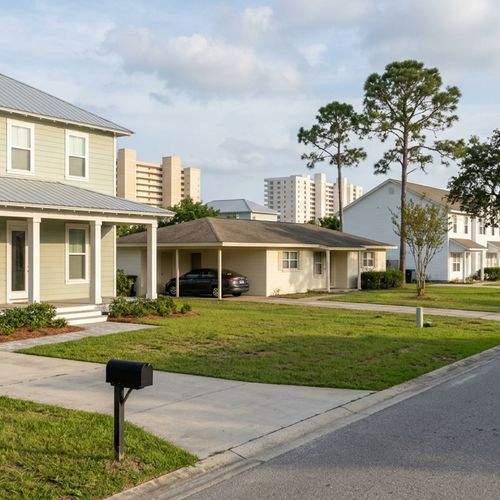

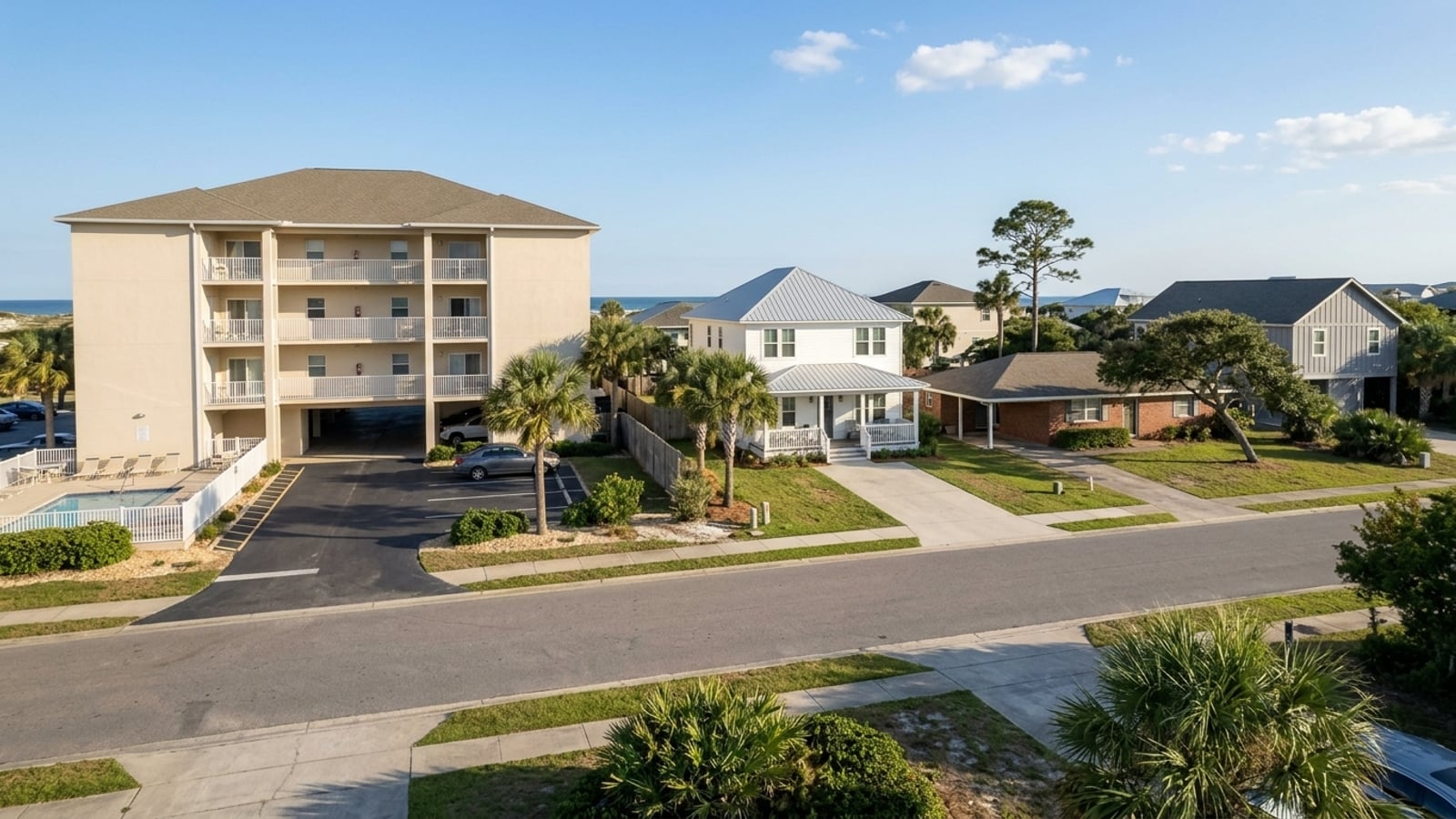
Running a rental in Panama City Beach means handling a specific, relentless list of tasks: booking inquiries, turnover cleanings, late rent, emergency AC repairs at 11 p.m.
Key Takeaway
A property manager in Panama City Beach prices and markets your rental, screens guests or tenants, collects rent and rental taxes, and handles maintenance, storm prep, and condo-association rules. If you own a condo, especially one rented by the night, full-service management is usually the stronger pick, because condo supply sits at 10.8 months and selling out of a weak rental is slow. If you own a house on an annual lease and live nearby, leasing-only help or self-managing can be enough.
Who This Guide Is For
You own, or are about to buy, a rental in Panama City Beach and are deciding whether to hire a property manager and what that manager should handle.
What a Property Manager Does in Panama City Beach
A manager runs the rental day to day so that list gets handled without you. In Panama City Beach the job matters more than usual for condo owners. Condos made up 183 of 290 recent sales and now take a median 126 days to sell at 95% of list after a 4.7% price drop. At those numbers, a property manager isn't a convenience; for a condo owner, it's often how the unit keeps earning while you wait for the market to shift. The tasks handled will vary depending on whether the home requires short-term or long-term rental property management in Panama City Beach.
Panama City Beach Market at a Glance for Rental Owners
These figures cover recent home sales, not rental rates. For current rent levels, compare them against average rent data for the area.
- Condo median sale price: $328,966, down 4.7% year over year (Condo, 90 days ending 2026-09-30)
- Condo median days on market: 126; sale-to-list: 95%; months of supply: 10.8; homes for sale: 646 (Condo, 90 days ending 2026-09-30)
- Single-family median sale price: $449,821, up 4.6% year over year; median days on market: 76; months of supply: 6.9 (Single family, 90 days ending 2026-09-30)
- Townhouse median sale price: $295,004, down 7.8% year over year; median days on market: 54; 10% sold above list (Townhouse, 90 days ending 2026-09-30, based on 31 sales; treat as a small sample)
- Median price per square foot: condo $362, single family $252, townhouse $248 (90 days ending 2026-09-30)
- All homes: 290 sold, median $364,526 (up 2.7% year over year), 913 for sale, 9.6 months of supply (All homes, 90 days ending 2026-09-30)
Vacation Rental vs. Long-Term Rental Management
These are two different jobs. A vacation rental offers higher potential income with more work and cost. An annual lease offers steadier, lower-touch income on a slower, more predictable cycle.
Single-family homes sit at 6.9 months of supply with a median price up 4.6% year over year. Holding a house on an annual lease puts you in a considerably firmer segment of the market than the condo sector right now.
Vacation Rental Management
The manager adjusts dynamic nightly pricing, communicates with guests, coordinates check-ins, schedules cleaning and linen turnovers between stays, and handles in-stay repairs. They also collect and remit the 6% state sales tax and the 5% Bay County tourist development tax that applies to stays of six months or less.
Revenue swings with the beach season, so pricing skill is the main thing you're paying for. If you want hands-off income from a condo you rent by the night or week, full-service vacation rental management is where to start.
Vacation management typically takes a much larger share of revenue than long-term management. Slow months still bring HOA dues, insurance bills, and the mortgage, whether the unit is booked or not.
Long-Term Rental Management
The manager places a tenant, collects monthly rent, handles repairs and renewals, and operates within Florida's residential landlord-tenant laws. If you want a steady annual tenant in a single-family house, long-term rental management is your starting point.
It is also the only legal path in a building that restricts short stays. What you give up is the seasonal revenue a well-booked vacation calendar can produce, and one bad tenant can cost months of rent before an eviction runs its course.
How a Property Manager Protects Your Rental Income
A manager standardizes how your property is presented and how money changes hands, keeping you out of the daily friction of collecting payments and chasing leads.
Pricing and Marketing Your Rental
For vacation rentals, a manager adjusts the nightly rate based on the season, local events, and booking pace, and manages listing photos and booking-site algorithms. For annual leases, they set the asking rent against comparable properties and market the vacancy. Fair Housing law governs ad wording, so the copy describes the property's features, not who should live there.
Ask any manager how they set rates and how often they adjust them. Pricing to fill the calendar can leave money on the table; pricing too high can leave the unit sitting empty. Get the occupancy and average nightly rate they achieved on comparable units last year, in writing.
Guest and Tenant Screening
Long-term managers apply the same written criteria to every applicant: income, credit history, rental history, and prior evictions. Keeping criteria financial and applied consistently keeps you within Fair Housing requirements. Vacation managers verify bookings, secure damage deposits or protection plans, and enforce house rules and occupancy limits.
If you want to self-manage but skip the riskiest steps, a leasing-only arrangement is worth considering. Screening reduces risk without eliminating it. Ask what the manager does, and who pays, when a screened tenant stops paying or a guest causes damage beyond the deposit.
Rent Collection, Taxes, and Owner Statements
The manager collects rent or booking revenue, remits tourist taxes on vacation stays, pays approved bills, and sends a monthly owner statement along with year-end tax documents. Florida law requires a broker who holds rent or deposits for owners to place them immediately in an escrow or trust account at a Florida bank, credit union, savings and loan, or title company. Those funds stay apart from the company's operating money, apart from a limited amount the law allows.
Some managers hold a reserve before releasing funds, so you don't have immediate access to everything collected. Ask to see a sample owner statement and confirm the exact date funds are released each month.
How a Property Manager Protects the Property and Keeps You Compliant
Panama City Beach rentals face coastal weather, high turnover, and overlapping state, county, city, and association rules. Failing to maintain the property or violating association rules can mean fines, lawsuits, or a revoked rental license. A manager is your local representative for all of it.
Maintenance, Inspections, and Storm Prep
Salt air, humidity, heavy AC load, and an Atlantic hurricane season running from June 1 through November 30 are the baseline conditions here. The manager coordinates routine and emergency repairs, runs inspections between stays or leases, secures the unit before a storm, and handles guest cancellations during an evacuation. That local presence is especially valuable if you live out of state and can't get eyes on the property quickly when a storm develops.
Ask for the manager's written hurricane plan and their dollar limit for repairs they can authorize without your approval. Expect a markup or coordination fee on repairs. Storm work can also move slowly when every owner on the coast needs contractors at the same time.
Condo Association and Local Rental Rules
Condo space runs a median $362 per square foot compared to $252 for a single-family house. Because the rental income has to carry a higher per-foot purchase price before dues, getting the rental strategy right matters more.
The association's declaration dictates minimum lease length, guest registration, rental fees, parking, and amenity access. Florida law limits when an association can apply newly adopted rental restrictions to owners who already own their units, but a good manager enforces all current rules with guests. Factor your HOA fees and rules into the numbers before committing to any management plan.
No manager can override the association. If the building bans short stays, vacation-rental management isn't an option. Get the current declaration, rules, and any pending amendments from the association before you buy or hire anyone.
Leases, Deposits, and Evictions Under Florida Law
For annual leases, the manager drafts a lease that follows Florida Chapter 83, handles the security deposit, serves required notices such as the three-day notice for unpaid rent, and coordinates evictions with an attorney when needed. After a tenant moves out, Florida gives a landlord a short, fixed window to either return the deposit or send written notice of a claim against it. Miss that window and you can forfeit the claim entirely.
Evictions take time and money even when handled correctly, and attorney and court costs typically pass through to the owner. Ask what the management agreement says about eviction fees and who chooses the attorney.
Is a Property Manager Worth the Fee?
Long-term managers typically charge a percentage of collected monthly rent; vacation managers charge a larger percentage of gross booking revenue. Both models often add setup, leasing, renewal, or maintenance-markup fees on top.
For illustration only: on a hypothetical $2,000 monthly rent, each percentage point of the management fee costs $240 a year. Run the numbers to see how the fee affects your cost basis and overall investing strategy.
Before you sign, settle three things. First, whether you will rent by the night or on an annual lease, since that decides the manager, licenses, and taxes. Second, whether you can reach the property within an hour for a leak, a lockout, or an evacuation. Third, whether your association limits rental terms, requires registration, or charges rental fees. If you need help evaluating a property's rental potential, Zack Seltzer can assist you with the figures.
Panama City Beach Property Management FAQs
What Are the Requirements to Be a Property Manager in Florida?
Managing rentals for others for compensation generally requires an active Florida real estate license, as a broker or a sales associate working under a broker. Owners managing their own property are exempt, and so are transient rentals of properties licensed as public lodging establishments under Chapter 509. Community association management needs a separate CAM license when the association has more than 10 units or a budget over $100,000. Confirm the manager's license on the DBPR license lookup.
What Are Property Managers Not Allowed to Do in Florida?
They cannot force a tenant out by locking them out, cutting off utilities, or removing belongings, which is known as a self-help eviction. They also cannot mix your funds with company money or advertise and screen in ways that violate Fair Housing law. To enter for repairs they must give at least 24 hours' notice, except when entry is needed to protect or preserve the premises.
Are Property Management Fees Tax Deductible?
The IRS lists management fees among ordinary rental expenses. If you also use the property personally, as many Panama City Beach vacation-condo owners do, you must divide expenses between rental and personal use. Ask a tax professional how that applies to your return.
What Is the 50% Rule for Rental Property?
The 50% rule is a rule of thumb that operating expenses, excluding the mortgage, run about half of rental income. In Panama City Beach, management fees, HOA dues, flood and wind insurance, and turnover cleaning on vacation rentals can push costs higher, so tally your own quotes rather than relying on the rule.
Can I Still Make Decisions If I Hire a Property Manager?
Yes, within the limits the management agreement sets. These typically cover a dollar limit on repairs, approval of new tenants or rent changes, owner-use blackout dates for vacation units, and vendor choice. Ask for any changes to those clauses in writing before signing.
How Do I End a Property Management Agreement in Florida?
Termination terms come from the contract: the notice period, any cancellation fee, and who keeps the tenant or future vacation bookings and deposits. Confirm in writing how escrowed deposits will be transferred.
How Long Does It Take a Property Manager to Fill a Vacancy in Panama City Beach?
Ask each manager for their average days vacant on comparable units over the last 12 months, and how they adjust the asking rent if a unit sits.
Sources
- Redfin: Data Center
- Florida Department of Business and Professional Regulation: FREC Rule Book
- Florida Department of Business and Professional Regulation: CAM FAQs
- Online Sunshine: Florida Statutes 475.25
- Bay County Tax Collector: TDT FAQ
- Online Sunshine: Florida Statutes 83.49
- Online Sunshine: Florida Statutes 83.56
- Online Sunshine: Florida Statutes 83.53
- IRS: Publication 527
- Awning: Vacation Rental Property Management
- The PM Cost Guide: Long-Term Management Fees
Check out this article next