
In Panama City Beach, the management fee you pay is shaped more by your rental model than by which company you choose.
Key Takeaway
Choose the rental model before you compare managers. Long-term management charges a share of collected rent, while vacation rental management takes a larger cut of each booking and adds cleaning and restocking costs. If you want predictable costs, start with long-term management. If your condo association allows nightly stays and you can carry the slow months, compare vacation rental commissions on a net basis. With 10.8 months of condo supply on the market, buyers can build either cost into the price they offer.
Who This Guide Is For
You own or are buying a Panama City Beach rental property and are deciding whether to hire a long-term or vacation rental manager and what it will cost.
How Property Management Fees Work in Panama City Beach
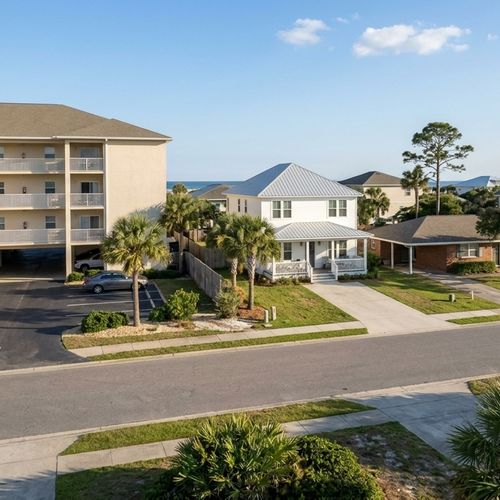
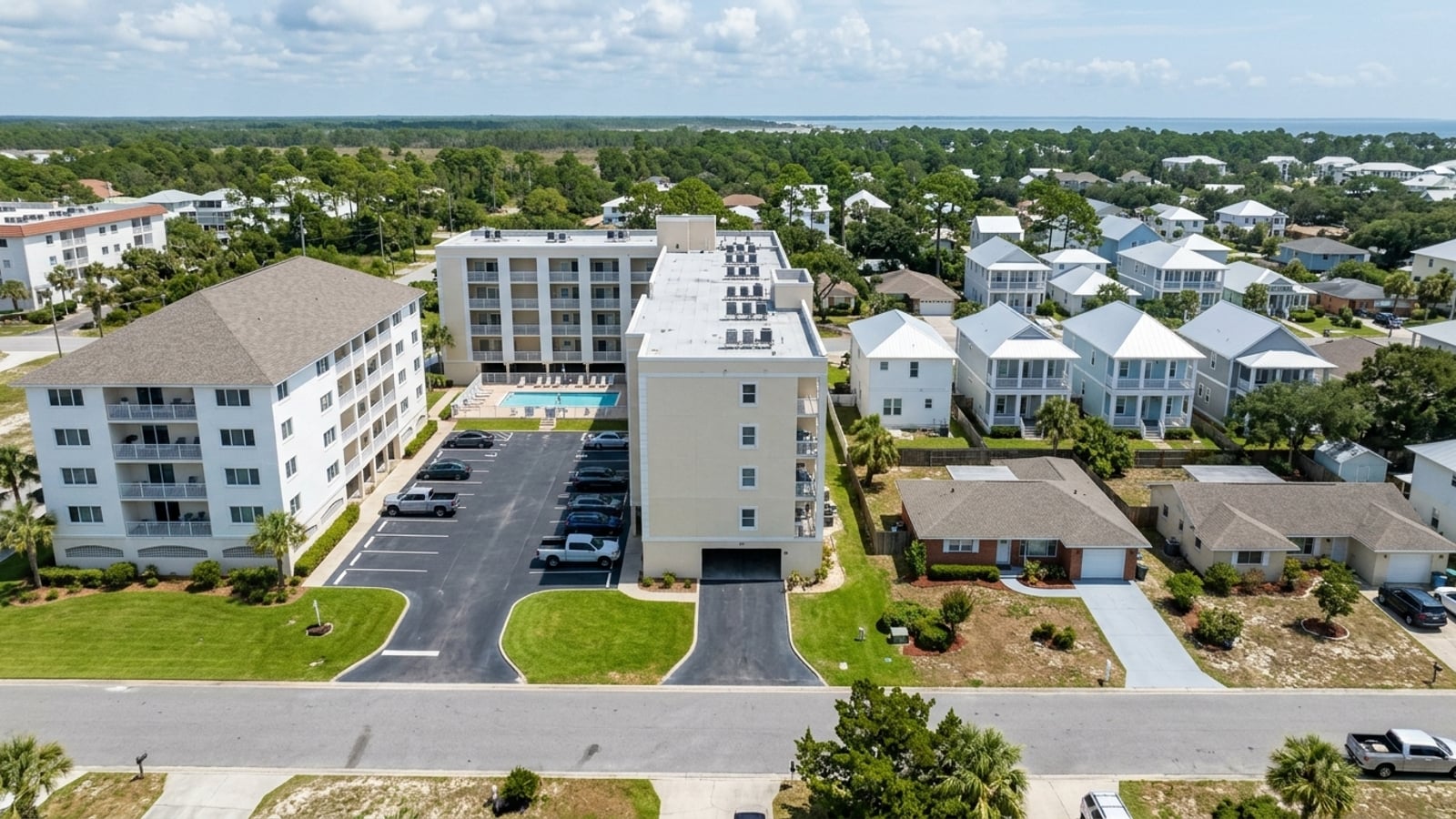
The rental model sets the fee structure, and in this market the choice usually comes up with condos: they were 183 of the 290 homes sold in the 90 days ending September 30, 2026. Standard services and fees define long-term rental property management in Panama City Beach.
- If your condo declaration or HOA bans rentals shorter than a month, skip vacation rental management and go to Long-Term Rental Management Fees and the Long-Term Lease Example.
- If you plan to use the property yourself, read Owner Stays and Blocked Dates before signing a vacation rental agreement.
- If you're still buying, read How Property Type Affects Management Costs and the worked example before you make an offer.
Long-Term Rental Management
Leases run several months or longer, and the fee follows average rent levels, which hold steady through the year. The trade-off is peak-season income: a 12-month lease earns the same in July as in January.
Vacation Rental Management
Nightly and weekly stays carry a higher commission because the manager runs check-ins, cleaning, guest messages and tax remittance. The trade-off is predictability: income swings with the season and the weather.
Long-Term Rental Management Fees
Tenant screening should rest on objective, lawful criteria: income verification, plus credit and background checks as permitted.
Monthly Management Fee
This is a percentage of rent collected, not rent due, so you pay the fee only once late rent arrives. Add-on fees can offset a low headline rate, so compare the total annual cost.
Tenant Placement Fee
A one-time fee, often a share of the first month's rent, for marketing, showings, screening and signing the lease. Turnover means paying it again, so ask whether the manager replaces a tenant who breaks the lease early at no charge.
Lease Renewal Fee
A smaller fee for a rent review and new paperwork when a tenant renews. Some owners negotiate it down or out.
Vacancy Fees
Percentage contracts usually earn nothing during vacancy. Ask about vacancy inspection charges and the minimum fee.
Maintenance Markups
Some managers add a percentage to vendor invoices or charge a coordination fee, often written into the agreement rather than the fee sheet. Get the markup in writing, along with the dollar threshold above which repairs need your approval.
Eviction Fees
This is the manager's fee for notices and court appearances. Filing, service and attorney charges are usually billed to you, so ask what the fee includes.
Vacation Rental Management Fees
Vacation rentals need a state license and may need local registration, and condo associations can restrict them. The fees combine a commission with pass-through costs billed to you or the guest.
Booking Commission
A share of gross rental revenue for listing, pricing, guest messages and check-ins. Ask whether booking-site fees come out before or after it. Because it is usually taken before cleaning, supplies and repairs, it claims more of your net income than the headline rate.
Cleaning and Linen Fees
Turnover cleaning and linens are paid through the guest's cleaning fee, by you, or split. If the guest fee falls short of the manager's cleaning cost, you cover the gap on every stay.
Restocking and Supplies
Toiletries, paper goods, kitchen basics and replacement linens are billed to you at cost or with a markup. Ask for a sample monthly owner statement to see them. These costs rise with bookings, so a busy summer raises costs along with income.
Tax Collection and Remittance
Guests pay Florida's 6% sales tax on transient rentals plus Bay County's 1% discretionary surtax, a combined 7%, and Bay County's 5% Tourist Development Tax. The manager usually collects and remits these taxes, but confirm in writing who files, because you remain responsible if they aren't remitted.
Owner Stays and Blocked Dates
Managers limit owner use of peak weeks, set how far ahead you can block dates and decide whether cleaning is charged after your stay. Every peak night you block earns nothing, and you may still pay for the cleaning.
Setup, Termination and Other Contract Fees
These terms apply to both models and change your true annual cost. Read the management agreement before signing.
Setup and Onboarding Fees
A one-time fee for the initial inspection, photos and account setup; ask for an itemized list. Vacation rental managers may also require furnishings, supply kits or upgrades before listing, which can cost more than the fee.
Minimum Monthly Fees
This flat charge applies when the percentage fee would come out lower, such as in slow months or on low-rent units. It hits hardest when you earn the least.
Maintenance Reserve
The manager holds back a balance from your payouts so routine repairs proceed without waiting for approval. A large reserve ties up your money and may need topping up after storm repairs.
Early Termination Fees
This is the cost of leaving before the term ends. For vacation rentals it often includes honoring or transferring booked reservations, so ask for the notice period and what happens to future bookings. If you sell or switch managers in the off-season, you may still owe commission on next summer's bookings.
Example: Management Costs on a Panama City Beach Condo
Take one condo at the median condo sale price of $328,966 (90 days ending September 30, 2026) and run both models. Property taxes, HOA fees and buyer closing costs are left out, so your net will be lower.
Long-Term Lease Example
Apply the monthly fee percentage to the median long-term condo rent for 12 months and add one placement fee. One vacancy month plus a new placement fee can erase most of a year's gap between two managers' rates.
Vacation Rental Example
For the same condo, apply the commission to average annual gross booking revenue for a two-bedroom vacation rental, then subtract any owner-paid cleaning shortfall and restocking. That higher gross depends on an association that permits nightly rentals and a good season; a weak summer moves the result more than any fee difference.
How Property Type Affects Management Costs
The type of home sets what upkeep the manager handles and which rules govern your rentals.
Condos
Condo prices fell 4.7% year over year, and the median condo took 126 days to sell, giving a buyer time to negotiate a price that absorbs the management cost. You pay HOA dues on top of management fees, and the association sets the rental rules, so get the declaration and its minimum lease length before counting on vacation rental income.
Single-Family Homes
Single-family values rose 4.6% to a median $449,821 on 78 sales, a higher entry cost on an asset gaining value. You pay exterior, roof, yard and pool upkeep, often through the manager with a markup, so expect higher maintenance bills than on a condo.
Townhouses
Townhouse prices fell 7.8%, yet 10% sold above list, so well-priced units still drew competition. With only 31 sales, the trend may not hold. Upkeep usually falls between condos and houses, and rental rules vary by community, so ask the HOA for its rental policy and current dues before counting on either model.
At a Glance
- All homes: median sale price $364,526, up 2.7% year over year; 290 sold; 9.6 months of supply; 913 listings (90 days ending 2026-09-30)
- Condos: median sale price $328,966, down 4.7% year over year; 183 sold (90 days ending 2026-09-30)
- Condos: median 126 days on market; 95% sale-to-list; 10.8 months of supply; 646 listings; median $362 per sq ft (90 days ending 2026-09-30)
- Single-family homes: median sale price $449,821, up 4.6% year over year; 78 sold; median 76 days on market; 6.9 months of supply; median $252 per sq ft (90 days ending 2026-09-30)
- Townhouses: median sale price $295,004, down 7.8% year over year; median 54 days on market; 10% sold above list; 7.4 months of supply; median $248 per sq ft. Based on only 31 townhouse sales, so treat as directional (90 days ending 2026-09-30)
Panama City Beach Property Management Fee FAQs
Does a Property Manager in Florida Need a Real Estate License?
Yes. Under Florida Statutes Chapter 475, anyone who manages rental property for another person for compensation needs an active Florida real estate license, though owners managing their own property and certain salaried employees are exempt. Check the manager on the Florida DBPR license lookup.
Do I Need a License to Rent My Panama City Beach Condo as a Vacation Rental?
Yes. Florida law requires a condo used as a vacation rental to hold a DBPR "Vacation Rental-Condominium" license. Inside city limits, Panama City Beach Ordinance 1632 also requires a Vacation Rental Certificate, issued after a life-safety inspection, for units rented three or more times a year for stays under 30 days. Local rules differ in unincorporated Bay County.
Can a Condo Association Ban Short-Term Rentals in Florida?
Yes, but under Florida Statute 718.110(13), an amendment banning rentals, changing the rental term or limiting how often owners may rent applies only to owners who consent and owners who take title after it takes effect. Ask for the current declaration and any pending amendments before buying.
How Long Does a Florida Landlord Have to Return a Security Deposit?
Florida Statute 83.49 sets the deadlines, which depend on whether there is a claim against the deposit. The property manager usually holds and returns deposits and must meet those deadlines.
How Long Does an Eviction Take in Florida?
Under Florida Statute 83.56, nonpayment requires a 3-day written notice to pay or vacate, and curable lease violations require a 7-day written notice to cure. Non-curable violations allow a 7-day notice ending the lease with no chance to cure. Bay County court scheduling sets the rest of the timeline.
Are Property Management Fees Tax Deductible on a Rental Property?
Yes. IRS Publication 527 lists management fees among deductible rental expenses, but if you also use the property yourself, you must split expenses between rental and personal use, and the personal-use share isn't deductible.
Sources
- Redfin: Data Center
- Florida Department of Revenue: Discretionary Sales Surtax Rate Table
- Bay County Tax Collector: Tourist Development Tax FAQ
- Florida DBPR: Vacation Rental Licensing Guide
- GulfGlo: New Panama City Beach Ordinance
- Florida Senate: 2025 Statutes Chapter 475
- Florida Legislature: 2025 Statutes Chapter 83.56
- Florida Senate: 2025 Statutes Chapter 718.110
- IRS: Publication 527
Check out this article next