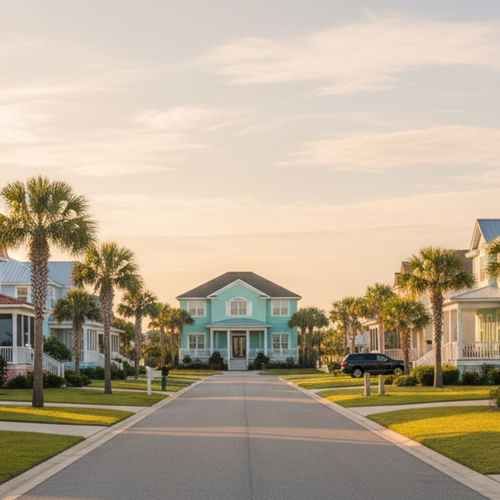

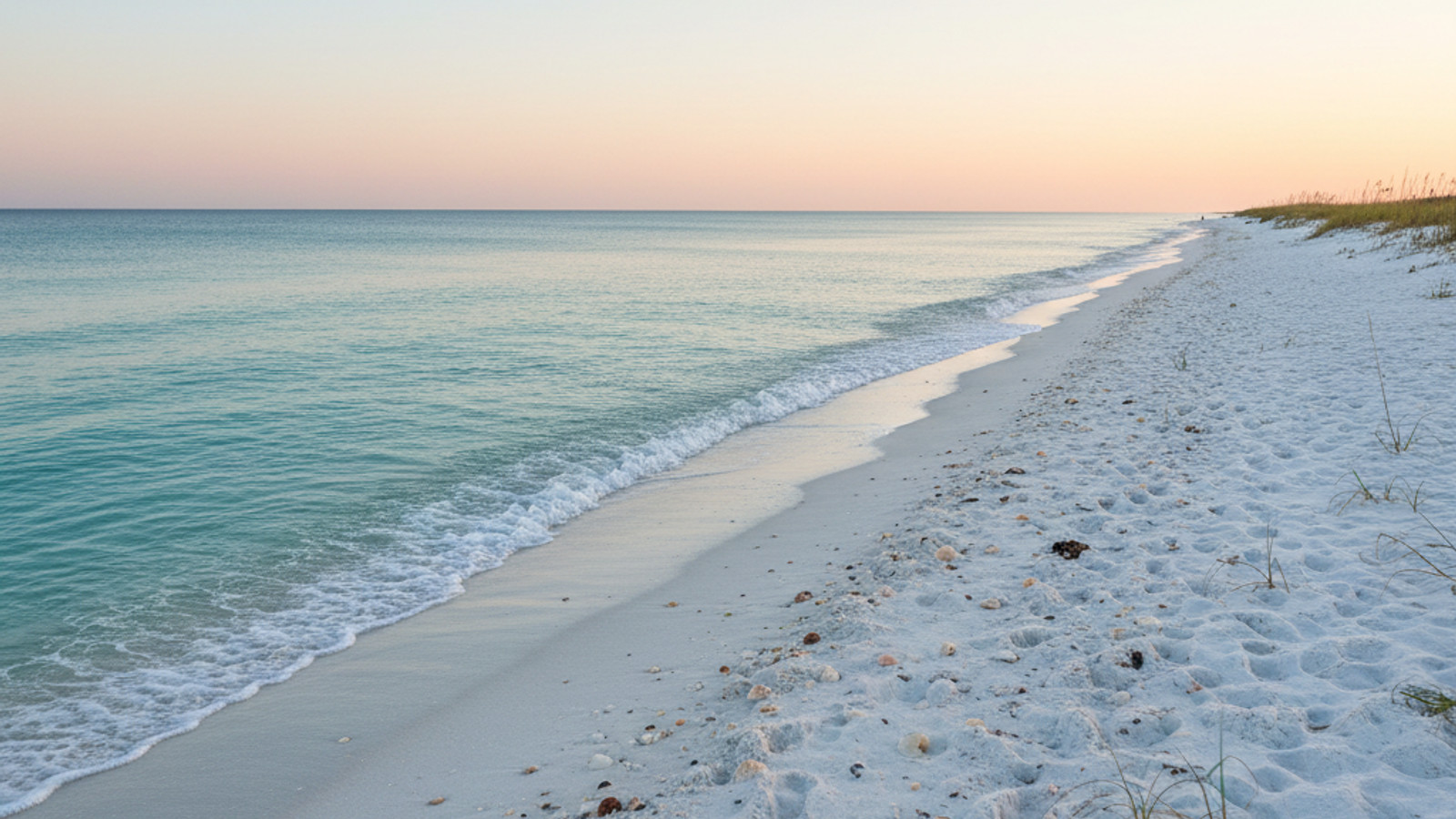
There is something undeniably magnetic about the Emerald Coast. Maybe it’s the sugar-white sand or the way the water shifts from turquoise to deep royal blue. If you have been browsing listings for homes for sale in Panama City Beach, you might have noticed a common frustration: inventory is tight. And often, the homes that are available are older models that don't quite match the modern, storm-resilient vision you have in your head.
This is where the idea of building a custom home starts to take root. Building allows you to design for your specific lifestyle—whether that’s a vacation rental investment or a primary residence for retirement. However, building in the Florida Panhandle is a different beast than building inland. Between the sandy soil, the salt air, and the wind codes, it requires a specific roadmap.
If you are ready to commit to a 12-24 month journey to get exactly what you want, let’s sit down and look at what it really takes to build here in 2026.
Build vs. Buy: Is Building Right for You?
Before we talk dollars and cents, we need to talk about patience. The biggest difference between buying an existing home and building one is the timeline. When you buy, you are usually looking at a 30 to 60-day closing window.
Building a custom home in our area is a marathon, not a sprint. You should realistically expect a timeline of 12 to 18 months minimum from the moment you close on the lot to the day you get your Certificate of Occupancy. If you are building a complex luxury home or dealing with sensitive waterfront environmental permits, that can easily stretch to two years.
However, the trade-offs can be well worth the wait. When you renovate an older condo or beach cottage, you are often stuck with 1990s floor plans and 1990s plumbing. Building new gives you total control over the layout, ensuring you get that open-concept kitchen or the specific bedroom count you need for rental income.
There is also a massive financial incentive regarding ongoing costs: insurance. Florida’s insurance market is tough, but premiums for brand-new construction built to the 2026 Florida Building Code are significantly lower than premiums for older housing stock. A new build is designed to withstand the weather, and insurance carriers reward that.
The Real Cost to Build in Panama City Beach (2026)
Let’s get to the numbers. One of the most common questions I get is, "What is the price per square foot?" It is a tricky metric because finishes vary wildly, but we can look at some local averages to help you budget.
For a standard custom home—think nice finishes, hardboard siding, and quartz countertops, but nothing exotic—you are likely looking at $200 to $400 per square foot.
If you are aiming for a luxury coastal build with high-end architectural details, elevators, or intricate rooflines, that number climbs to $400 to $800+ per square foot. Keep in mind, these numbers generally cover the structure itself, not the land or the site prep.
Understanding Hard Costs vs. Soft Costs
To build a realistic budget, you need to separate your "hard costs" from your "soft costs."
Hard Costs (The Construction) These are the tangible items you can touch. It includes your foundation, framing, labor, roofing, and interior finishes. This is the bulk of your loan, but it’s not the whole picture.
Soft Costs (The "Surprise" Fees) These are the expenses that often catch buyers off guard. In our market, you need to budget for:
- Architect and Engineering Fees: usually 2% to 15% of the total project cost.
- Surveys and Soil Tests: Essential for determining how deep your pilings or foundation must go.
- Permit Fees: Bay County generally charges around $6 for every $1,000 of construction valuation. The City of Panama City Beach has its own separate fee schedules.
Impact Fees You need to pay close attention here because this changed recently. Impact fees are one-time payments to the local government to offset the strain a new home puts on infrastructure. As of October 2024, Panama City Beach significantly increased these fees. For example, the Parks & Recreation impact fee jumped approximately 42%, and there are additional fees for Police and Fire services. You must factor these hikes into your budget, as they can add thousands to your bottom line before you even pour concrete.
Finding and Prepping Your Lot
Finding the right dirt is just as important as picking the right builder. In Panama City Beach, lot prices vary drastically based on proximity to the Gulf. You might find inland lots ranging from $3,000 to $50,000 per acre, while Gulf-front or proximity-to-beach parcels can command $50,000 to $150,000+ per acre.
When you are scouting vacant land listings in PCB, the most critical check is jurisdiction. You need to know if the lot is within the City of Panama City Beach limits or if it is in unincorporated Bay County. Even if the mailing address says "Panama City Beach," it might be under County jurisdiction. This matters because it affects your property taxes, your zoning for short-term rentals, and which building department approves your plans.
You also need to budget for environmental prep. This isn't just mowing the grass. You may need to clear scrub oak or pine, and if you are near the water, you have to navigate strict dune protection laws. Additionally, "turtle lighting" ordinances are strictly enforced for beachfront properties to ensure artificial light doesn't disorient nesting sea turtles.
Navigating Hurricane Codes and Permits
It is easy to get frustrated by the "red tape" of building permits, but in the Florida Panhandle, these codes are your best friend. They are the reason homes built after Hurricane Michael are still standing strong.
Wind-Borne Debris Region Most of our area falls into what is called the Wind-Borne Debris Region. If you are building within one mile of the coast, where wind speeds can exceed 130 mph, the Florida Building Code requires you to use impact-rated windows and doors or install approved hurricane shutters. Most modern builds opt for impact glass—it’s quieter, more energy-efficient, and doesn't require you to run outside to put up shutters when a storm approaches.
Elevation and Flood Zones FEMA flood maps dictate how high your first living floor must be. In many coastal zones, you cannot have living space on the ground level. Instead, the ground floor is used for parking or storage and built with "breakaway walls" or flow-through vents that allow floodwaters to pass through without compromising the structure's integrity.
The Permitting Gauntlet Be prepared for a multi-step review. Your plans will go through Zoning (to check setbacks and height), Environmental review (to protect wetlands and dunes), and finally, the Building plan review. This process protects your investment, but it takes time.
Choosing a Custom Home Builder in PCB
Your builder is your partner for the next two years, so choose wisely. Don't just look at the price tag; look for local expertise.
Coastal Experience: Ask specifically about their experience with Coastal Construction Control Line (CCCL) permitting. If they haven't built near the water before, the Department of Environmental Protection (DEP) requirements can bog them down for months.
Energy Codes: Ensure they are up to speed on the 2026 energy efficiency mandates.
Contract Clarity: Ask for a clear explanation of "Allowances" vs. "Fixed Price." In a volatile material market, you want to know exactly who pays the difference if lumber prices spike.
The Drive-By Test: Ask for a list of homes they built 3 to 5 years ago. Drive by them. Do the stucco and siding still look good? How a home ages in the salt air tells you more about quality than a shiny brochure ever could.
Frequently Asked Questions
How much does it cost to build a house in Panama City Beach in 2026?
For a standard custom home, you should budget between $200 and $400 per square foot for construction costs. If you are planning a high-end luxury home with coastal-specific engineering, costs typically range from $400 to $800+ per square foot, excluding the cost of the land.
Can I act as my own general contractor in Florida?
Yes, you can pull an "Owner-Builder" permit, but Florida law requires you to sign a strict disclosure statement. You must supervise the work yourself, and you generally cannot sell or lease the home for at least one year after construction is complete.
How long does it take to build a custom home in PCB?
You should plan for a timeline of 12 to 24 months. The design and permitting phase alone can take 3 to 6 months, while the actual construction typically takes 9 to 18 months depending on the size of the home and material availability.
What are the impact fees for a new home in Panama City Beach?
Impact fees are one-time charges collected by the local government to fund infrastructure. As of October 2024, residential impact fees saw a significant increase (around 17-45% depending on the category), so you should verify the current schedule with the building department to avoid budget surprises.
Check out this article next