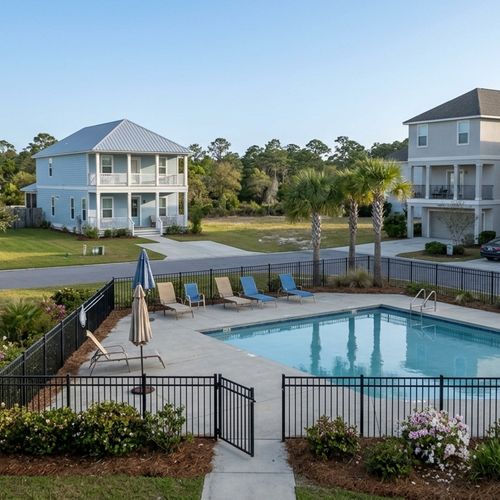

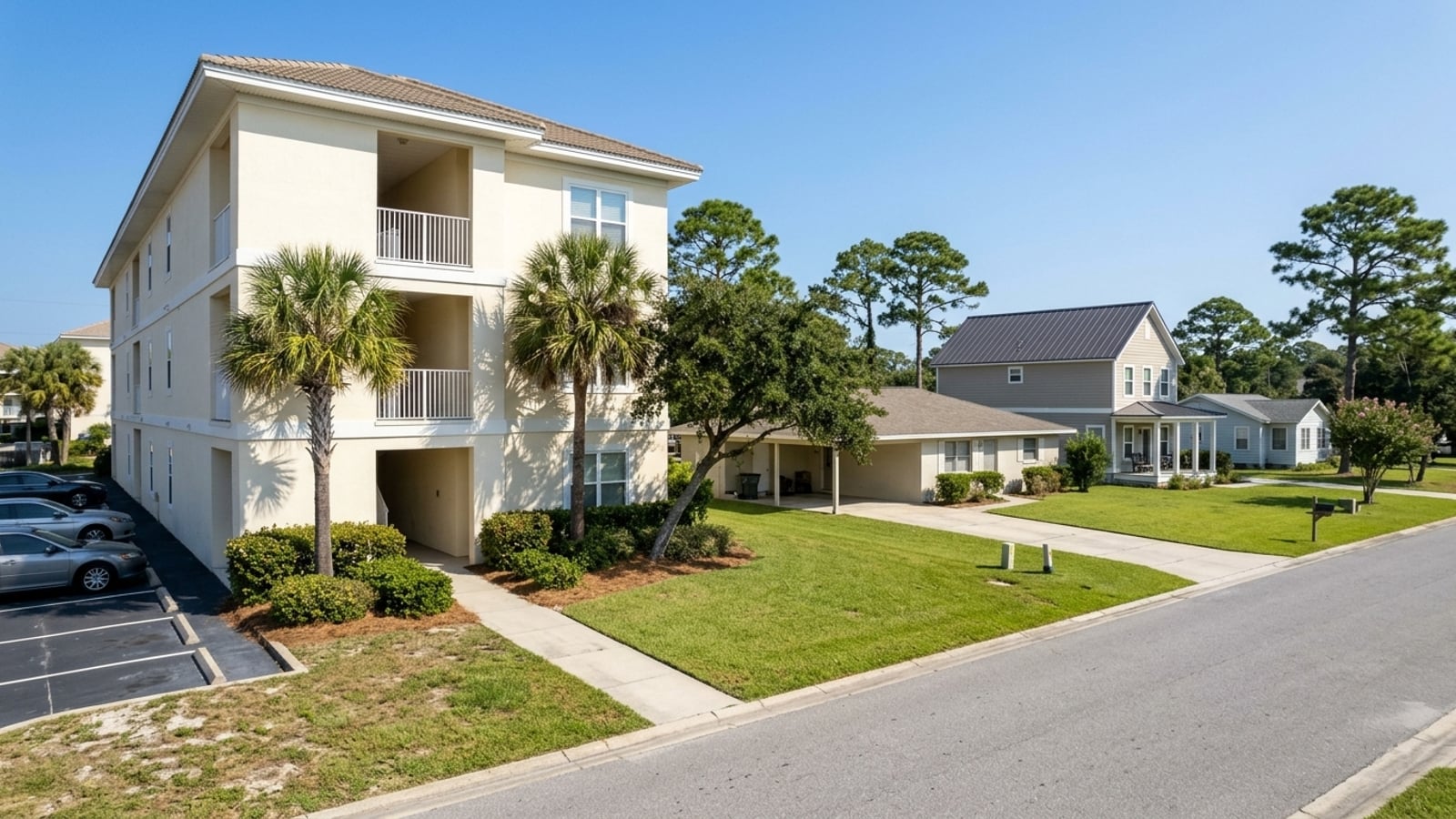
Every general Florida eviction guide treats the state as one uniform procedure. Panama City Beach is not that simple. The first decision an owner has to make is which law the occupant falls under. File under the wrong one and you're back at day one in a market where an idle condo does not move quickly. This is not legal advice, and contested cases warrant a Florida attorney.
Key Takeaway
In Florida, a landlord can remove a residential tenant only through an eviction filed in county court, which means Bay County Court for Panama City Beach. The process starts with a 3-day notice for unpaid rent or a 7-day notice for other lease violations, and lockouts or utility shutoffs are illegal at every stage. If the occupant is a guest on a short vacation stay, Florida's lodging law sets the removal process instead, so confirm which law applies before serving any notice.
Who This Guide Is For
You own or rent a house or condo in Panama City Beach, a rental has gone wrong, and you need to know which legal process applies and what each side can and cannot do next.
Which Florida Law Applies to Your Rental?
In Panama City Beach, condos make up 646 of 913 active listings and carry 10.8 months of supply (90 days ending 2026-09-30). Many of these units move between vacation and long-term use. Florida sorts occupants into three groups: long-term tenants, vacation guests and unauthorized occupants. Each is removed under a different chapter of state law. An owner who files a lawsuit against a vacation guest wastes time. An owner who tries to lock out a true tenant violates the law.
For the bigger picture, see Long-term Rental Property Management in Panama City Beach.
Long-Term Residential Tenancies (Chapter 83)
Any rental of a dwelling for residential use falls here, whether written or oral, annual or month-to-month. Most year-round condo and house rentals in the city sit here. Under Florida Statutes Chapter 83, the only legal way to remove a tenant is a court eviction.
A vacation booking that stretches into months, or a unit the occupant treats as a primary residence, can convert a guest into a tenant. The owner then needs the full court process. Compare the booking terms and length of stay with a Florida attorney before acting.
Vacation Rental Guests (Chapter 509)
Some transient guests in a licensed vacation rental are intoxicated, brawling or disturbing other guests. For them, the operator gives notice to leave and can call law enforcement under the lodging statute, with no eviction lawsuit required.
This shortcut only works for genuinely transient stays in a properly licensed unit. Confirm the unit's DBPR vacation rental license and any Bay County or city registration before treating an occupant as a transient guest.
Unauthorized Occupants and Squatters
Florida's 2024 law lets an owner of residential property ask the sheriff to remove someone who never had permission to occupy it. The owner files a sworn affidavit, without an eviction case, which matters for vacant second homes and seasonal condos.
If the occupant ever had a lease, paid rent, or was a family member or former tenant, the affidavit route does not apply and a court eviction is required. A false affidavit carries criminal penalties.
Landlord and Tenant Rights During a Tenancy
A Florida landlord must at all times during the tenancy comply with applicable building, housing and health codes. Where no such codes exist, the landlord must keep roofs, windows, plumbing and structural components in good repair.
These duties often become eviction defenses or tenant claims later. A tenant can withhold rent only after giving 7 days' written notice specifying the noncompliance and the intent to withhold.
Repairs, Habitability and Entry
The landlord must give reasonable notice of at least 24 hours before entering for repairs. Entry is limited to between 7:30 a.m. and 8:00 p.m.
In a condo, a failed elevator, roof problem or common-area water issue is the association's repair obligation. The tenant's withholding remedy still runs against the unit owner, though, so a dispute between owner and association can stall the owner's own nonpayment eviction.
Security Deposits
A landlord who does not intend to impose a claim must return the full deposit within 15 days of move-out. To keep any portion, the landlord must mail a notice of intent to impose a claim by certified mail within 30 days of move-out.
Miss that certified-mail deadline and you lose the right to keep any of the deposit, though you can still sue separately for damages. The deadline runs from move-out, including after an eviction, and owners frequently miss it while dealing with the unit. Calendar the deadline the day possession returns, and photograph the unit on that day.
Eviction Notices: Fixable Problems vs. Ending the Tenancy
Every Florida eviction requires a written notice before a landlord can file a lawsuit. A wrong or defective notice is the most common reason a Florida eviction gets dismissed and has to restart.
The notices fall into three groups: demanding payment, demanding a fix, or ending the tenancy. No-fault terminations must comply with fair housing law and cannot be retaliatory. One sent right after a tenant complaint invites that challenge.
Unpaid Rent: The 3-Day Notice
When the only problem is late rent, start with the 3-day notice. It demands payment or possession within three days, and it must state the exact rent owed and how to pay.
The three days exclude Saturdays, Sundays and legal holidays, so a notice served on a Thursday may not expire until the following Tuesday. The notice can be thrown out and the clock restarted in two cases: the amount includes late fees or charges the lease does not define as rent, or the deadline is miscounted. Read the lease for a grace period and the definition of rent before filling in the amount.
Lease Violations: The 7-Day Notices
There are two versions. A 7-day notice to cure covers fixable problems such as unauthorized pets or parking. A 7-day notice without the chance to cure covers serious or repeated violations: intentional damage, or a repeat of the same violation within 12 months.
Using a no-cure notice for a first-time, fixable violation invites dismissal. Keep a dated copy of any earlier cure notice, because the repeat-violation route depends on it.
End of Lease or Month-to-Month Termination
Florida has no just-cause requirement, so a fixed-term lease can end at its term. A month-to-month tenancy can be ended with written notice at least 30 days before the end of a monthly period. A tenant who stays past a proper termination can owe double rent.
Many leases auto-renew or require a longer notice period, up to the 60 days the statute allows, and the lease controls.
Step-by-Step Eviction Process in Bay County
Once a notice expires, the case runs through Bay County Court, the Bay County Clerk of Court and the Bay County Sheriff's Office.
Step 1: File the Eviction Complaint in Bay County Court
File the complaint with the Bay County Clerk, attaching the lease and the expired notice. Possession and unpaid rent are typically separate counts. The filing fee is $185 plus $10 per tenant for issuing the summons. Ask the Bay County Clerk of Court for current fees and form versions before filing.
If the notice or lease is not attached, or the complaint names the wrong owner, the case can be dismissed.
Step 2: Serve the 5-Day Summons
The Bay County Sheriff or a certified process server serves the summons. The tenant has five days, excluding weekends and legal holidays, to respond. Posting on the door is allowed after failed personal service attempts, but posted service supports possession only. To get a money judgment for back rent, the tenant generally has to be served personally.
Step 3: Tenant Answers and Deposits Rent Into the Court Registry
To raise any defense other than payment, the tenant must deposit the rent alleged due, plus rent that comes due during the case, into the court registry. The tenant can instead file a motion asking the court to decide the amount.
A tenant who disputes the rent but makes no deposit or motion waives the defenses. A written answer alone usually leads to a default judgment for possession. Tenants served with a summons should contact a legal aid office serving Bay County.
Step 4: Default, Hearing and Final Judgment
With no response or deposit, the landlord moves for default and the judge enters final judgment for possession. A contested case goes to a hearing, where the landlord must prove the notice, lease and default.
Defects that slipped past at filing become the tenant's best arguments at a hearing. Check whether any rent was accepted after a notice was served, and talk to a Florida attorney about the effect before filing.
Step 5: Writ of Possession and the Bay County Sheriff
After judgment, the Clerk issues a writ of possession, and the Bay County Sheriff's Office charges a $90 fee to serve it. After the sheriff posts the writ, the tenant has 24 hours before removal. The sheriff then returns possession to the landlord.
The writ returns the unit, not the money. Collecting a money judgment is a separate process, and many evicted tenants have little to collect.
Illegal Eviction Practices and Penalties
The federal Fair Housing Act and the Florida Fair Housing Act apply through the entire tenancy and eviction. Decisions to serve notice or end a lease must rest on lease terms and conduct, never on protected characteristics.
Self-Help Evictions
Changing locks, cutting utilities, removing doors or appliances, or taking the tenant's belongings to force a move-out is prohibited regardless of what the tenant owes. A Florida landlord who locks out a tenant can owe actual and consequential damages or three months' rent, whichever is greater, plus attorney fees.
A tenant months behind on rent can still win that claim, turning a rent debt into a judgment against the owner.
Retaliatory Evictions
A landlord may not raise rent, cut services or bring an eviction because a tenant complained to a code enforcement agency, joined a tenant organization or asserted legal rights. The defense does not protect a tenant who is behind on rent or in genuine violation. Document the reason for any termination when it is made.
Condo Rentals and Association Rules in Panama City Beach
Most rentals in Panama City Beach are condos, so the association can affect who rents, on what terms and where the rent goes. Its statutory powers can intercept rent payments or restrict leasing altogether.
When the Condo Association Collects the Rent
If the unit owner is behind on assessments, Florida law lets the association demand in writing that the tenant pay rent directly to the association. A tenant who does not comply can be evicted by the association.
A tenant who follows the demand is credited against rent owed to the owner, so the owner cannot evict for that nonpayment. The owner loses the rent stream until the arrears are paid. Tenants should ask for a copy of the association's written demand before redirecting payments.
Lease Approval and Rental Restrictions
Many declarations require association approval of tenants, set minimum lease terms or cap the number of rentals. A later amendment restricting rentals binds only owners who consented to it or who took title after it took effect.
A lease signed in breach of the declaration can expose the owner to association enforcement and complicate any eviction. Read the declaration, rules and any rental amendments. Then ask the association for its current approval process and the status of the owner's account before signing.
Eviction Timeline, Costs and What Comes Next
An uncontested eviction stacks four waiting periods: the notice period, the five-day response window, court processing time and the 24-hour writ. The weekend and holiday exclusions on notices and summonses stretch each one.
Beyond the clerk, summons and sheriff fees above, budget for attorney fees. A prevailing party may recover those under the statute or lease.
How Long and How Much an Uncontested Eviction Takes
The statutory periods set the minimum duration, but local court processing sets the actual calendar. A contested case, a registry-deposit motion or a defective notice can add weeks. Lost rent during the case usually costs more than the filing fees.
Re-Letting or Selling After an Eviction
Once possession returns, the owner chooses the next step. Condos currently take a median 126 days to sell, and condo prices fell 4.7% year over year (90 days ending 2026-09-30). An owner planning to sell should expect the listing period to stack on top of the eviction vacancy, and buyers have room to negotiate. Re-letting keeps income flowing in the meantime.
Units often come back from an eviction needing repairs and cleaning, which delays both re-letting and listing. Deposit deductions are capped by what the notice of claim states.
At a Glance
- Condo share of the market: 646 of 913 active listings (condo vs. all homes, 90 days ending 2026-09-30)
- Condo sales: 183 of 290 homes sold (condo vs. all homes, 90 days ending 2026-09-30)
- Condo median sale price: $328,966, down 4.7% year over year (condo, 90 days ending 2026-09-30)
- Condo median days on market: 126; months of supply: 10.8; sale-to-list: 95% (condo, 90 days ending 2026-09-30)
- Single-family median sale price: $449,821, up 4.6% year over year; 76 median days on market; 6.9 months of supply (single family, 90 days ending 2026-09-30)
- Townhouse median sale price: $295,004, down 7.8% year over year; 54 median days on market (townhouse, based on 31 sales, 90 days ending 2026-09-30)
- All homes: 9.6 months of supply; 100 median days on market; 95.4% sale-to-list (all homes, 90 days ending 2026-09-30)
Panama City Beach Eviction and Landlord-Tenant Law FAQs
How Long Do Evictions Stay on Your Record in Florida?
Under the federal Fair Credit Reporting Act, screening companies can report an eviction judgment for seven years from entry, or longer if the statute of limitations runs longer. Florida has no comprehensive statute for sealing civil eviction records, so the court record typically remains public unless a judge orders it sealed.
Can You Be Evicted for Paying Rent Late Every Month in Florida?
Yes. Each late payment can support a new 3-day notice. A landlord who keeps accepting late rent without objection may waive the right to evict for that lateness.
What Is the New Law in Florida for Renters?
Since 2023, Florida has required 30 days' notice to end a month-to-month tenancy. Landlords can also offer an optional fee in lieu of a security deposit. The 24-hour entry notice took effect in 2022. Since 2024, owners can ask the sheriff to remove unauthorized occupants by sworn complaint.
How Long Before a Landlord Can Evict You in Florida?
A landlord can serve the 3-day notice as soon as rent is late, unless the lease grants a grace period. A court case can be filed only after that notice expires.
Does Panama City Beach Have Its Own Tenant Protection Laws?
No. Florida's 2023 preemption leaves residential landlord-tenant rules to the state, effectively barring local rent control. Tenant protections come from the state landlord-tenant statute and federal and state fair housing law, while local short-term rental registration rules govern vacation units.
Can a Landlord Evict a Tenant Without a Written Lease in Florida?
Yes, but only through the court process. An oral tenancy is periodic based on how rent is paid, so a month-to-month oral tenant gets the 30-day notice before an eviction can be filed.
Can a Landlord Evict a Tenant to Sell the Property in Florida?
A sale does not end a lease on its own. A fixed-term tenant generally stays through the term unless the lease has an early-termination or sale clause. A month-to-month tenant can be given the statutory 30-day notice.
What Happens to a Tenant's Belongings After an Eviction in Florida?
Once the writ of possession is executed, the landlord may remove the tenant's belongings and is not liable for them under the eviction statute. Property left behind in other situations follows Florida's abandoned property procedure, with written notice to the former tenant. Before the writ is executed, the self-help rules above apply.
Sources
- Redfin: Data Center
- Florida Statutes Chapter 83
- Florida Statutes 509.141
- Florida Statutes 82.036
- Florida Statutes 83.51
- Florida Statutes 83.49
- Florida Statutes 718.116
- Florida Statutes 718.110
- Bay County Clerk of Court Eviction Packet
- Bay County Sheriff's Office Civil Division
- Florida Statutes 83.60
- Florida Statutes 83.57
- 15 U.S.C. §1681c
Check out this article next