
If you are browsing listings for a vacation property or investment on the Emerald Coast, you have likely experienced "sticker shock" when looking at the monthly dues. You find a condo with a perfect view, but then you see the HOA fee is $900 or even $1,200 a month. It is the most common hesitation buyers have when looking at real estate here.
However, comparing these fees to a standard electric bill back home is apples and oranges. In Panama City Beach, specifically with condos, that fee is often bundling your insurance, internet, water, and future repairs into one payment. It is crucial to distinguish between high-service Condo HOAs and low-service Single-Family Home HOAs.
Understanding where that money goes - and knowing the new Florida laws regarding reserves - is the key to making a smart purchase. Here is the reality of HOA fees in Panama City Beach for the 2025 and 2026 market.
Average HOA Fees in Panama City Beach (2026)
Let's get straight to the numbers. The cost of association fees varies wildly depending on whether you are buying a vertical slice of a resort or a detached house on a quiet street.
As of 2026, median condo fees generally sit around $831 per month, but that average hides a wide spectrum based on amenities and location.
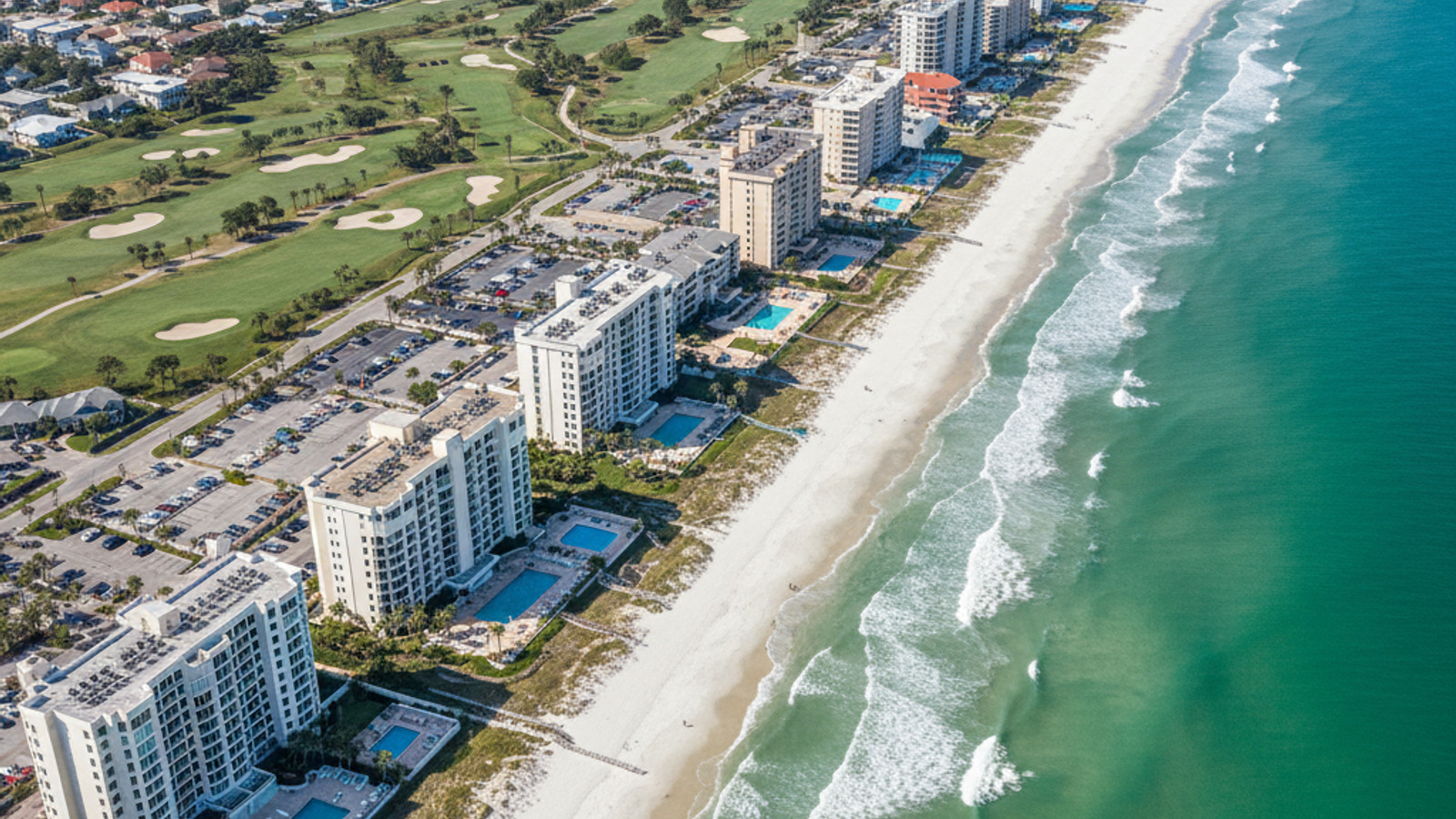
Beachfront Condos: Expect to pay between $600 and $1,400+ per month. These buildings have elevators, parking garages, heated pools, and high wind insurance premiums. A complex like Sunrise Beach might range from $800 to $1,400 depending on the unit size.
Inland & Golf Villas: These usually run $300 to $600 per month. Without the saltwater exposure and high-rise elevators, maintenance costs drop significantly.
Single-Family Homes: These are much lower, typically $50 to $200 per month. Some neighborhoods, especially older ones, have no HOA at all.
Why the big range? It usually comes down to square footage and "amenity density." A resort like Laketown Wharf offers five pools and a nightly light show, which requires a higher operating budget than a quiet three-story building on the West End.
Why Are HOA Fees Increasing in Florida? (The 'SIRS' Factor)
If you have owned property in Florida before, you might notice fees are higher now than they were three years ago. This isn't just inflation; it is a result of legislative changes designed to keep buildings safe.
Following the surfside tragedy, Florida overhauled its condo laws. The biggest change involves the Structural Integrity Reserve Study (SIRS). For any condo building three stories or higher, associations are now required to have a structural reserve study done to determine how much money they need for future major repairs (like roofs, load-bearing walls, and waterproofing).
Here is the kicker: As of December 31, 2024, associations can no longer vote to "waive" these reserves. In the past, owners could vote to keep monthly fees low by not saving for the future. That option is gone. Associations must now fully fund these structural reserves.
While HB 913 (passed in 2025) introduced some flexibility regarding how reserves are funded - allowing for certain lines of credit - the financial burden still ultimately falls on the owners. Additionally, insurance premiums for wind and flood coverage spiked recently, though we are seeing some stabilization in early 2026.
What Do Condo HOA Fees Cover in PCB?
When you write that check for $1,000, you aren't just paying for someone to mow the grass. In a Panama City Beach condo, that fee replaces several bills you would pay separately for a single-family home.
Master Insurance Policy: This is the big one. It covers the building's exterior, including wind and flood damage. As an owner, you only need an "HO-6" (walls-in) policy, which is significantly cheaper than a standard homeowner's policy.
Utilities: Most condo fees include water, sewer, and trash. Many also include bulk contracts for cable TV and high-speed internet. If you paid for those separately, that is easily $150 - $200 of value right there.
Amenities: This covers the upkeep of resort pools, fitness centers, beach boardwalks, and security services.
Maintenance: Exterior painting, roof repairs, elevator service, and landscaping are all included.
Reserves: Think of this as forced savings. A portion of your fee goes into a bank account to pay for the new roof ten years from now, so you theoretically don't get hit with a massive bill all at once.
Finding Low HOA Fees: Options and Trade-offs
If you are looking at homes for sale in Panama City Beach and simply cannot stomach a high monthly fee, you do have options. However, every low fee comes with a trade-off.
Low-Rise Condos Buildings with fewer than three stories often have lower fees because they don't require expensive elevator maintenance or the same level of structural reserve funding as high-rises.
Single-Family Neighborhoods You can look at areas like Bid-a-wee, which has a voluntary (and very low) HOA, or older subdivisions on the beach side. These offer ownership without the monthly overhead.
The "Low Fee" Trap Be very careful with older condos that advertise unusually low fees. If a building is 25 years old and has low dues, they may not have saved enough money for mandatory repairs. This puts you at risk for a Special Assessment - a surprise bill that can range from $5,000 to $50,000+ per owner to cover immediate repairs. sometimes, paying a higher monthly fee means the building is financially healthy and you won't get hit with surprise costs later.
Buyer Checklist: Reviewing HOA Financials Before You Buy
Before you fall in love with a property, you need to look under the hood. When reviewing Panama City Beach condos, your agent should help you request the following documents.
Current Year Budget: Look at the income versus expenses. Is the association operating at a deficit?
Most Recent Reserve Study: This is critical. Turn to the page that shows "Percent Funded." If they are only 10% funded, run the numbers carefully.
Milestone Inspection: If the building is 25 to 30 years old, ask to see the Milestone Inspection report. This will tell you if there is structural damage that needs fixing.
The "Condo Rider": Review this to see exactly what the Master Insurance policy covers so you know what insurance gaps you need to fill.
Frequently Asked Questions About PCB HOA Fees
What is the average HOA fee in Panama City Beach?
While it varies by building, the median condo fee usually hovers around $831 per month. Beachfront properties with extensive amenities will be higher ($1,000+), while inland villas or townhomes can be significantly lower ($300 - $500).
Do condos in Panama City Beach have special assessments?
Yes, they can happen. A special assessment occurs when the HOA needs money for a project (like a new roof or balcony restoration) and doesn't have enough in the reserve fund. This is why checking the financial health of the association is a critical part of your due diligence.
Why are HOA fees so high in Panama City Beach?
The primary drivers are insurance and amenities. Coastal properties require expensive wind and flood insurance policies. Additionally, maintaining elevators, pools, and salty-air corrosion on a high-rise building costs much more than maintaining a home in a non-coastal suburb.
Are HOA dues tax-deductible?
Generally, HOA fees are only tax-deductible if the property is used as a rental business or investment property. For a personal primary residence or second home, they typically are not. Always consult a CPA for your specific tax situation.
What happens if I don't pay HOA fees in Florida?
HOAs in Florida have significant power. If you fail to pay dues, the association can place a lien on your property and eventually foreclose on it to recover the debt. They can also suspend your right to use common amenities like the pool.
What is the '5-year rule' for HOAs?
In the context of costs, buyers often confuse this with the 10-year cycle for reserve studies. However, generally speaking, any major contract or budget shift should be viewed with a long-term lens. Focus on the Reserve Study, which projects costs out over 15 to 30 years, rather than short-term rules.
Disclaimer: I am a real estate professional, not an attorney or financial advisor. HOA laws in Florida, including provisions from HB 913 and SB 4-D, are subject to change. Always verify current HOA documents and budgets with the association before purchasing.
Check out this article next