

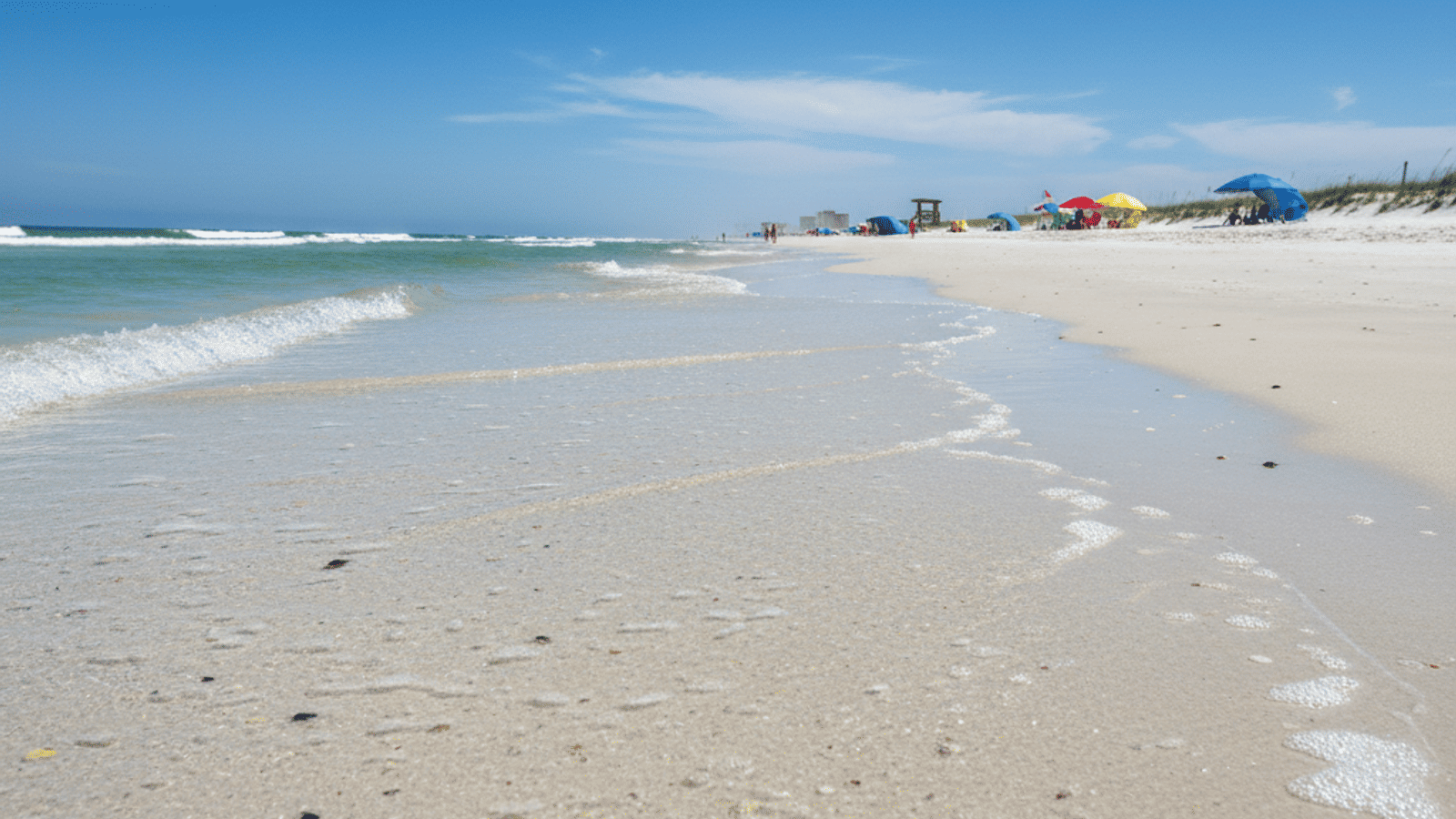
Panama City Beach real estate sits on the Gulf Coast with wide white sand, a lively shoreline, and a year-round mix of locals and tourists.
Safety here is multi-faceted: shoreline hazards (rip currents and changing surf), routine urban crime that concentrates in commercial corridors, and an active set of local responders, lifeguards, beach safety teams, municipal police and county first responders, working to manage both.
What are the official crime rates in Panama City Beach?
Florida’s statewide reporting systems and the Panama City Beach Police Department publish municipal and county summaries that include PCB. Those FDLE and municipal tables show PCB records both property and violent crimes, with property crimes (thefts, burglaries, motor-vehicle theft) making up the larger share of incidents inside the city limits.
Third-party crime aggregators that pull FBI/NIBRS and local reporting have recently placed Panama City Beach toward the higher end of U.S. communities for combined violent and property crime per capita (2023–2024 reporting windows).
Those aggregated rankings are useful for trend spotting, but they vary by data vintage and by how seasonal visitors are counted—coastal towns that swell with tourists often show elevated per-capita rates because the visitor population complicates the denominator. When you need offense-level counts and clear methodology, use the FDLE county/municipal reports or the city police tables.
How does crime in Panama City Beach compare to U.S. averages?
Recent aggregator summaries show Panama City Beach posting crime rates above the national average, especially once numbers are adjusted per one hundred thousand residents. Tourism channels many offenses toward the beachfront corridors, and the steady churn of visitor nights means the resident base used in per-capita math doesn’t tell the whole story.
- Violent crime: 1,031 per 100,000 residents
- Property crime: 5,951 per 100,000 residents
- Total crime: 6,983 per 100,000 residents
When comparing cities, rely on population-adjusted rates and confirm whether a dataset includes visitor estimates. Always match the month and year across sources before drawing conclusions so you’re evaluating the same reporting window.
How does PCB compare to nearby towns?
Nearby municipalities; Panama City across the bay, Lynn Haven, and Mexico Beach, offer useful context. Aggregated reports (2019–2024 windows) often show Panama City with higher violent-crime rates than Panama City Beach, while smaller towns like Mexico Beach can show lower absolute counts but larger per-capita swings year to year because of small populations. Lynn Haven commonly falls between those extremes.
How to research crime for specific neighborhoods in PCB
- Start with municipal sources. PCB Police Department and Bay County public-safety portals publish incident maps, press logs, and records-request contacts. These are the foundational datasets.
- Supplement with visitor-aware aggregators. Aggregators often combine FBI/NIBRS and local submissions and are convenient for trend visuals; use them for context, not exact offense coding.
- Check local reporting. Local newspapers and community sites quickly surface recent incidents and neighborhood-level concerns.
- Request records if you need a narrow window. For a very specific timeline (for example, nightly theft reports near a particular pier or hotel strip), file a records request with PCB Police or Bay County Sheriff, agencies usually provide incident reports or point you to an open data portal.
Who provides law enforcement and emergency services?
The Panama City Beach Police Department handles municipal policing and routine public safety inside city limits. The Bay County Sheriff’s Office provides county-wide support and coordinates with state resources when needed.
For shoreline response, the City’s Fire Rescue / Beach Safety Division staffs roving responders year-round and schedules seasonal lifeguards at staffed piers and flagged zones. These teams cover water rescues, beach first-aid, and coordination with county or state agencies for larger incidents.
Most guarded coverage concentrates at main public piers and heavily used beach segments; during peak season those locations are typically staffed daily from about 10:00 a.m. to 6:00 p.m.
Is there a community watch or local safety programs?
Yes. Neighborhood and business watch initiatives exist in and around PCB. The police department supports community programs such as extra-patrol requests, vacation house checks, and resident alert messaging.
Hotels and property managers commonly coordinate with law enforcement for targeted patrols on busy weekends. If you’re staying at a rental or hotel, ask the front desk about local watch groups and non-emergency contacts for extra patrol requests.
FAQs about Panama City Beach Crime & Safety Conditions
Are Panama City Beach’s beaches guarded and what are lifeguard hours?
Guarded beach locations are staffed seasonally at key piers and busy access points. Recent seasonal schedules list lifeguards seven days a week from about 10 a.m. to 6 p.m., though exact times and season windows change year to year, always check the city or tourism beach-safety page for current schedules.
What do the beach flags mean and when should I stay out of the water?
Flags follow a simple system: green = low hazard; yellow = increased caution; red = high hazard; double red = water closed; purple = dangerous marine life. Obey red or double-red flags and lifeguard direction. NOAA and local beach authorities publish consistent flag definitions; respect posted warnings.
How common are rip current incidents, and how should swimmers react?
Rip currents are the leading coastal hazard. If caught in one, don’t swim against it, float, signal for help, and swim parallel to shore until you can exit the current. Authorities issue flag warnings when rip currents are expected; during dangerous conditions they may advise visitors to stay out of the water.
Is Panama City Beach safe for tourists staying at beachfront hotels?
Hotel strips are heavily patrolled and highly trafficked, but thefts and disorderly incidents still occur—especially on crowded weekends. Standard precautions apply: secure valuables in hotel safes, lock cars, avoid leaving belongings unattended on the sand, and use extra care at night in commercial corridors.
What emergency number should I call from the beach?
For life-threatening emergencies call 911. For non-emergency police business or extra-patrol requests, contact the Panama City Beach Police Department’s non-emergency line or use the city’s online request forms (see the municipal police page for current phone numbers).
Are large inflatables or sunscreen rules enforced?
Large inflatables that obstruct swimmers or drift offshore can be restricted by local ordinance; lifeguards will post signage and adjust flags for debris or hazardous shoreline conditions. Sunscreen use is encouraged but not enforced—follow guard instructions and posted warnings for safety.
Check out this article next