
If I had a dollar for every time an out-of-town buyer told me they were looking for a home in "Panama City" when they really meant the beach, I’d have enough to buy a nice condo at Pier Park.
It is the most common confusion in our local real estate market. To the outsider, they sound like the same place. But for those of us living here, Panama City (PC) and Panama City Beach (PCB) are two distinct municipalities separated by the Hathaway Bridge and a world of lifestyle differences.
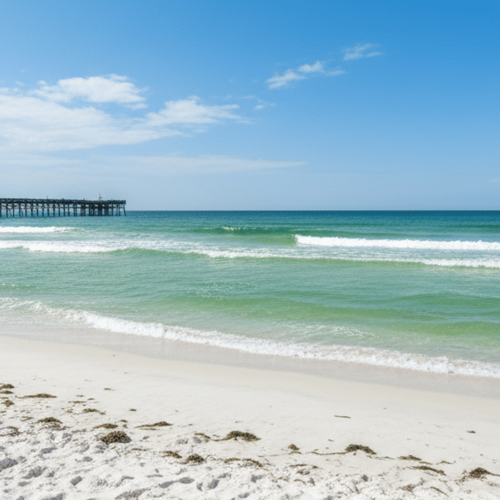
Here is the geography in a nutshell: Panama City is the inland "city proper" on the mainland. It sits on the bay, has the historic downtown, and functions as the business hub. Panama City Beach is the resort town located on the barrier island directly on the Gulf of Mexico.
One offers the "salt life" resort experience; the other offers a "hometown" feel with more bang for your buck. Let’s break down the numbers so you can decide which side of the bridge belongs on your relocation checklist.
Lifestyle & Vibe: Resort Energy vs. Historic Charm
The moment you cross the Hathaway Bridge, the energy shifts. Deciding between these two usually comes down to what you want your Tuesday afternoon to look like.
Panama City Beach is high-energy, tourism-driven, and focused entirely on the water. It is a vacation vibe 365 days a year. Life here revolves around public beach access, the nightlife at Pier Park, and sunset boat rides. However, that energy comes with a transient feel. You will have new neighbors every Saturday in many condo complexes, and the traffic swells massively during Spring Break and summer.
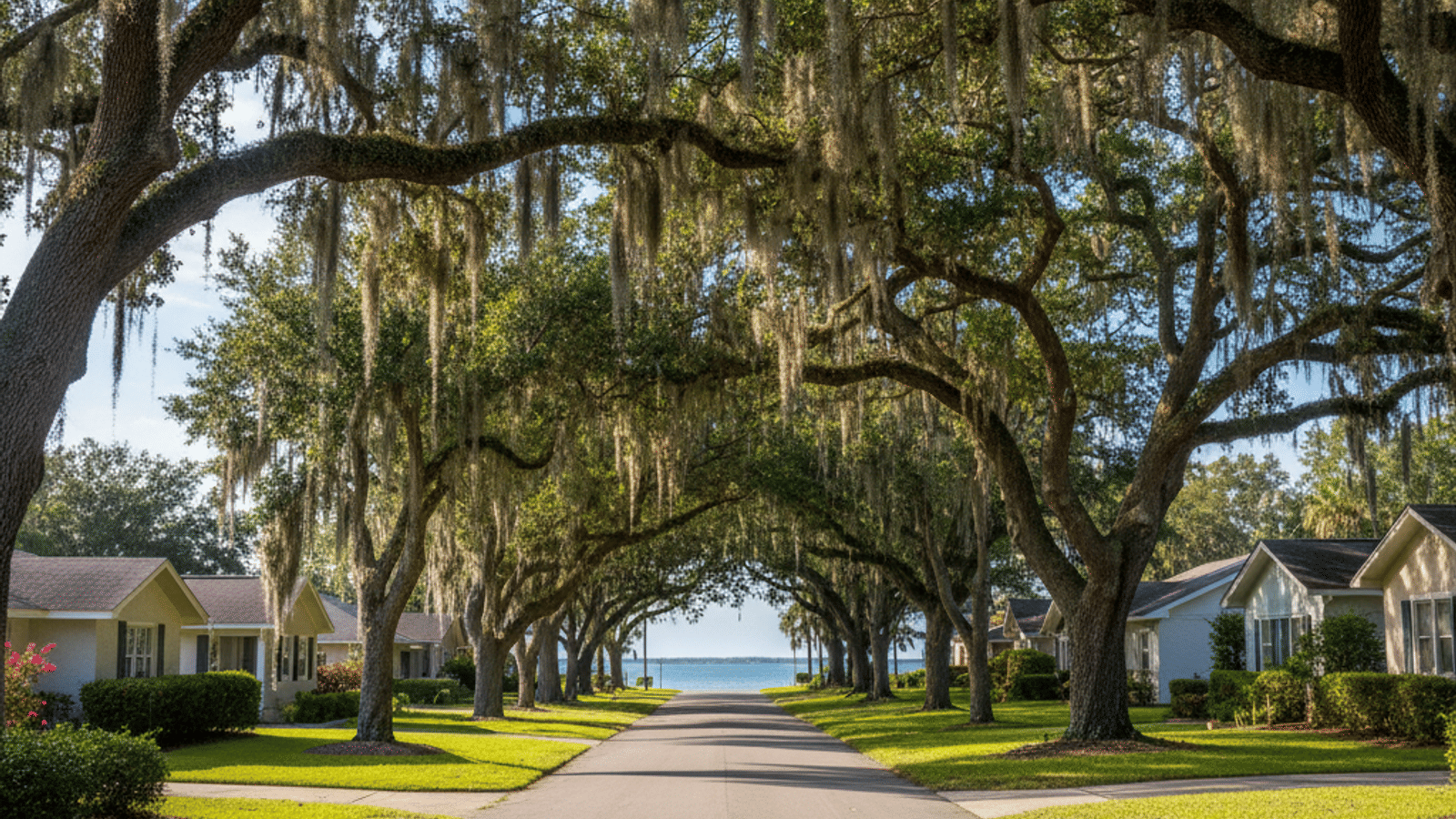
Panama City moves at a slower, more traditional pace. This is where the locals tend to live, work, and bank. It has a deep connection to St. Andrews Bay and a growing arts scene. The downtown area (Harrison Avenue) and the St. Andrews district offer walkable, authentic "Old Florida" charm with coffee shops, local pubs, and oaks dripping with Spanish moss.
Seasonality is the big differentiator here. PC stays consistent year-round. PCB is a rollercoaster - quiet and breezy in January, but packed bumper-to-bumper in July.
Real Estate Market Comparison (2026 Trends)
When we look at the hard data, these are two completely different asset classes.
Panama City Beach commands a premium because you are paying for proximity to the Gulf of Mexico, similar to Santa Rosa Beach and Miramar Beach. The market here is dominated by condos and short-term rentals (STRs). If you are looking at Panama City Beach homes for sale, you are likely looking at an investment property or a second home.
- Price Point: Median prices generally hover in the $440K to $500K range.
- Trend: As of 2026, inventory has risen, shifting PCB slightly toward a buyer’s market.
Panama City is where you find traditional single-family homes on actual land. The inventory here includes everything from 1950s cottages to brand new construction in master-planned communities.
- Price Point: You get much more house for your money, with median prices typically between $240K and $320K.
- Trend: The market is steadier here, driven by locals and remote workers rather than investors.
If you are thinking about buying a vacation rental, PCB is the clear winner for income potential. But if you want a yard and a garage for a reasonable price, PC is the answer.
Cost of Living: Where Will Your Dollar Go Further?
Beyond the purchase price, the monthly carry costs are where the rubber meets the road. Generally speaking, living in Panama City is about 10% to 15% cheaper overall than living on the beach.
Housing Costs This is the biggest gap. Your mortgage payment in town will likely be significantly lower than on the beach for comparable square footage.
Taxes & HOAs This is where buyers often get sticker shock in PCB. Many condos on the beach have HOA fees ranging from $500 to over $1,000 per month. These fees cover insurance on the building, pools, and elevators, but they wreck a monthly budget quickly. In contrast, many neighborhoods in PC have no HOA at all, or very low annual fees.
Everyday Expenses There is a "tourist tax" on the beach - not literally, but practically. Groceries, gas, and dining out tend to cost a bit more in PCB because businesses are pricing for vacationers. In PC, you are paying local prices.
The Insurance Factor: Hurricanes and Flood Zones
You cannot talk about moving to Florida without talking about insurance. It is the number one pain point for buyers right now, and the difference between these two cities is stark.
Panama City Beach is a barrier island. It is beautiful, but it is exposed. A large portion of the beach is in Flood Zone AE or VE, meaning flood insurance is almost always mandatory if you have a mortgage. Because of the wind risk, homeowner's insurance premiums can be double or triple what you pay inland. We often see annual premiums hitting the $4K to $6K+ range for modest homes or condos.
Panama City has a major advantage here: elevation. While bayfront properties definitely carry risk, large swathes of the city are in Flood Zone X. In these areas, flood insurance is usually optional and much cheaper. A standard policy inland might run $1.5K to $3K.
Since Hurricane Michael in 2018, PC has seen a massive wave of new construction. These newer homes are built to stricter codes, which also helps keep insurance costs down compared to older, un-renovated stock.
Top Neighborhoods & Districts to Know
If you are browsing listings, it helps to know the specific pockets that locals love.
In Panama City:
- SweetBay: This is a newer, master-planned community with great amenities, parks, and bay access. It’s very popular for those who want a "new build" feel.
- The Cove: If you love history, this is the spot. Think old oak trees, deep-water docks, and high-end historic homes.
- St. Andrews: A quirky, walkable village vibe with a marina. It feels like a small fishing town tucked inside the bigger city.
In Panama City Beach:
- West End (near 30A): This area is quieter and more residential. It has a higher price point but lacks the chaotic energy of the main strip.
- Lower Grand Lagoon: A favorite for boaters. It’s a mix of residential homes and rentals with easy access to the Gulf.
- Pier Park Area: This is the heart of the action. It is condo-heavy and walkable to everything, but you will deal with traffic.
Daily Life: Schools, Commute, and Amenities
For those relocating to the Florida Panhandle full-time, the mundane details matter.
Schools Both cities fall under the Bay District Schools system. PCB schools often rate highly because of the tax base, but PC has some incredible magnet and charter options, including University Academy, which is a major draw for residents.
The Commute The "Bridge Traffic" is a real conversation topic here. If you live in PC and work in PCB, you are going against the grain of tourist traffic, which is good. But if you live in PCB, getting anywhere during peak season (Spring Break or July) can be frustrating. Front Beach Road and Back Beach Road suffer from severe congestion. PC has standard rush hour traffic, but it flows much better than the beach gridlock.
Amenities
- PCB: World-class beaches, water parks, resort dining, and nightlife.
- PC: Two major hospitals, government offices, diverse dining (Thai, Indian, soul food), and boating on the Bay.
The Verdict: Who Should Live Where?
Choosing between these two usually comes down to your tolerance for tourists versus your desire for value.
Choose Panama City Beach if:
- You want the "salt life" and seeing the Gulf daily is non-negotiable.
- You plan to short-term rent the property for part of the year.
- You prioritize walkability to the beach over traffic concerns and higher insurance costs.
Choose Panama City if:
- You want more square footage and a yard for your money.
- You want to avoid high HOA fees and extreme insurance premiums.
- You prefer a community feel where your neighbors are permanent residents, not weekly renters.
Frequently Asked Questions
Is it cheaper to live in Panama City or Panama City Beach?
Panama City is almost always cheaper. Between lower housing prices, significantly lower insurance premiums, and the lack of high condo HOA fees, your monthly cost of living is roughly 10-15% lower inland than on the beach.
How far is Panama City from the beach?
It is very close. Depending on where you live in town, you are usually a 10 to 15-minute drive across the Hathaway Bridge to the white sands of the Gulf. You get the beach access without paying the beach premium.
Does Panama City flood as much as Panama City Beach?
Generally, no. While waterfront areas in Panama City (like The Cove) have flood risk, large areas of the city are in Flood Zone X (low risk). Panama City Beach, being a barrier island, has much higher exposure to storm surge and widespread flood zones.
Is Panama City Beach a good place to live year-round?
Yes, but you have to embrace the seasonality. The "off-season" (November through February) is quiet and beautiful, but you must be patient with heavy traffic and crowded restaurants during Spring Break and the summer months. It is worth looking at surrounding towns such as Walton Beach as well.
Check out this article next