
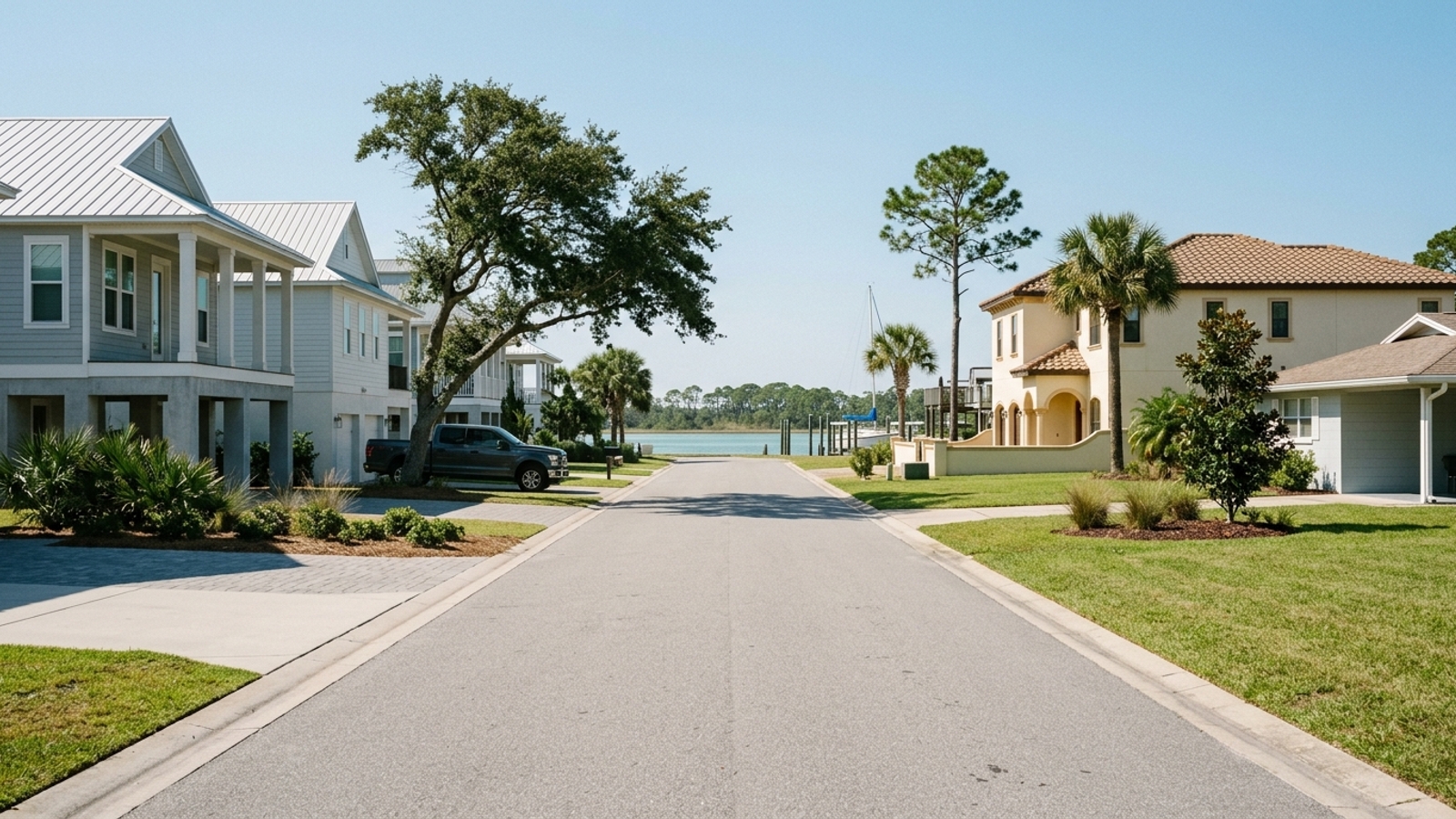
Waterfront homes along the Front Beach Road corridor list in the $4.5 to $5 million range. That's not a rounding error - buying waterfront property in Panama City Beach is a commitment that demands the right professional in your corner. Buying or selling on the Gulf of Mexico, Grand Lagoon, St. Andrews Bay, or Lake Powell means dealing with salt corrosion, strict environmental rules, and insurance that looks nothing like what you'd carry on an inland home.
General real estate knowledge doesn't cut it here. You need someone who understands the physical and regulatory realities of this coast, not just how to write a contract.
The Panama City Beach Waterfront Real Estate Market Today
The overall median sale price in Panama City Beach sits at roughly $362,000, with homes spending about 108 days on the market. Waterfront pricing operates in its own tier entirely - and within that tier, there's another tier.
Gulf-front estates generally list between $4.5 million and $5 million. Lagoon and bay-access homes usually fall in the $1.1 million to $3 million range. Nearby Panama City bay, canal, or river listings carry a median closer to $299,000. Where you land on that spectrum comes down to one question: do you have direct Gulf frontage, or are you on the bay, lagoon, or canal?
Gulf-Front, Bay-Front, and Canal Properties
Direct Gulf frontage commands the highest premium - unobstructed beach access, sunset views, the works. Properties on Grand Lagoon or St. Andrews Bay tend to attract serious boaters who need protected water and a private dock. Canal properties and those on Lake Powell offer a quieter waterfront experience, though they come with their own specific zoning considerations.
Current Market Conditions and Pricing
Right now the local market is holding about 941 available homes, which translates to roughly an 8.9-month supply of inventory. Homes are selling at about 95% of list price. If you're a seller, plan for a longer marketing period. If you're a buyer, you have real room to negotiate on inspection items - use it.
Why Buying Waterfront Property in Panama City Beach Requires a Specialist
Florida law divides water access into riparian and littoral rights, depending on whether the water is flowing or tidal. Those rights dictate what you can build on the shoreline and how you can legally access the water.
A specialist knows how to read these property lines. A generalist often doesn't - and misunderstanding those boundaries can lead to expensive legal disputes with neighbors or the state. You need to know exactly where your property ends and public water begins before you close, and an agent experienced in Bay County knows how to pull that from the deed.
Local Water Rights on the Gulf and Bay
Littoral rights apply to Gulf-front and bay-front homes. They grant you access to the water, but typically not ownership of the submerged land beneath it. Riparian rights apply to river or stream properties. Either way, you should confirm in writing what specific water access transfers with the sale.
VE and AE Flood Zones and Insurance Rules
Most waterfront properties here sit in FEMA-designated VE or AE flood zones. VE zones carry the highest wave-action risk, which triggers strict building codes and specialized wind and flood insurance requirements. Budget for these premiums before you fall in love with a property - private market policies and Citizens Property Insurance Corporation rates vary widely based on the home's elevation, and the spread can be significant.
Property Factors to Evaluate in Bay County
The Florida Department of Environmental Protection (FDEP) regulates construction near the shoreline, and the Coastal Construction Control Line (CCCL) controls where and how structures can be built along the beach. These aren't technicalities you deal with after closing. They shape what you can do with the property from day one.
Waterfront inspections go well beyond the standard roof-and-HVAC review. Inspectors look specifically for saltwater corrosion on pilings, bulkheads, and exterior hardware. And any existing dock needs to have valid FDEP and Bay County permits on file - if it was built without them, that liability lands on you as the new owner, along with any potential removal costs.
Seawalls and the Coastal Construction Control Line
A failing seawall can run tens of thousands of dollars to replace. Inspectors evaluate both the barrier itself and the tie-backs anchoring it to the yard. If you want to make additions or major repairs seaward of the CCCL, you'll need special state permits - and those can take months to secure. Know that going in.
Dock Permits and Water Depth Access
If you're a boater eyeing Grand Lagoon or St. Andrews Bay, water depth at low tide matters as much as the dock itself. A deep-water vessel has clearance requirements that plenty of canal or bay-front homes simply can't meet. Measure your boat's draft against the actual water depth at the property - don't assume.
Choosing the Right Real Estate Agent for Your Waterfront Search
A standard residential agent might handle dozens of inland transactions a year and never once encounter a submerged land lease. That's not a knock on them - it's just a different specialty. Finding the right professional means looking for a track record specific to the Gulf or the local bays, not just a high transaction volume in general.
The other piece is the network. A waterfront specialist already has relationships with local marine contractors, specialized inspectors, and insurance brokers who handle coastal properties. That matters when you're trying to get through due diligence efficiently.
Don't assume an expert in Gulf-front condos is automatically the right fit for a single-family home with a deep-water dock on St. Andrews Bay. Review past sales data and confirm the agent's experience matches the specific type of water you're targeting.
Questions to Ask During the Interview
Ask every candidate how many waterfront transactions they've closed in the past year. Ask specifically about their familiarity with CCCL permitting and local dock regulations. And ask for real examples of how they've handled appraisal challenges on unique coastal properties - the answer will tell you a lot.
Checking Local Waterfront Track Records
Ask to see recent closed listings in Bay County that match your target property type. An agent with a proven history on the Gulf or local bays will catch red flags that a generalist walks right past - and on a transaction at this price point, that difference is worth finding out about before you hire someone.
Frequently Asked Questions
Why do I need a specialized waterfront real estate agent in Panama City Beach, FL?
You need a specialist because waterfront transactions involve unique regulatory, environmental, and financial challenges. A standard agent may not understand Florida Department of Environmental Protection rules or Coastal Construction Control Line permits.
What questions should I ask when interviewing a waterfront realtor in Bay County?
You should ask about their experience with VE and AE flood zones, their knowledge of local dock permitting, and their track record with Gulf-front versus bay-front properties. Ask if they have a network of specialized marine inspectors.
How do waterfront property inspections differ from standard home inspections in Florida?
Waterfront inspections assess saltwater corrosion, bulkhead integrity, and seawall condition. They also verify that existing structures like docks have the proper Bay County and state permits on file.
Do realtors charge a higher commission fee for buying or selling waterfront property in PCB?
No, real estate commissions are negotiable and generally follow the same percentage structure as inland homes. However, the higher price point of waterfront estates - often $4.5 to $5 million on the Gulf - results in a larger total fee.
Will a waterfront specialist help me handle FEMA flood zones and coastal insurance requirements in Panama City Beach?
Yes, a knowledgeable agent will identify if a home is in a VE or AE flood zone. They can connect you with insurance brokers who write specialized wind and flood policies for coastal Florida.
How long does the closing process take for Gulf-front properties compared to standard inland homes?
It depends on the complexity of the sale. While cash transactions can close in a few weeks, financed waterfront purchases often take longer due to specialized appraisals, extensive inspections, and securing flood insurance.
Check out this article next