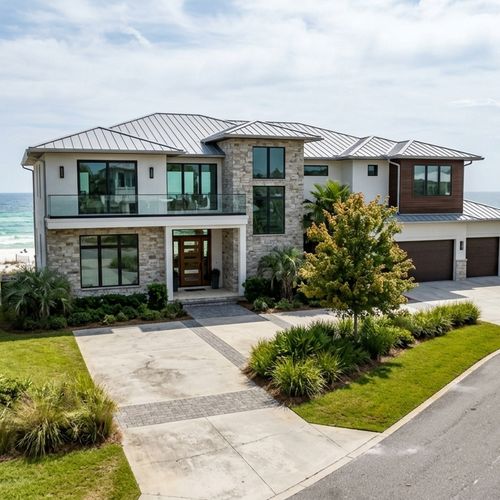

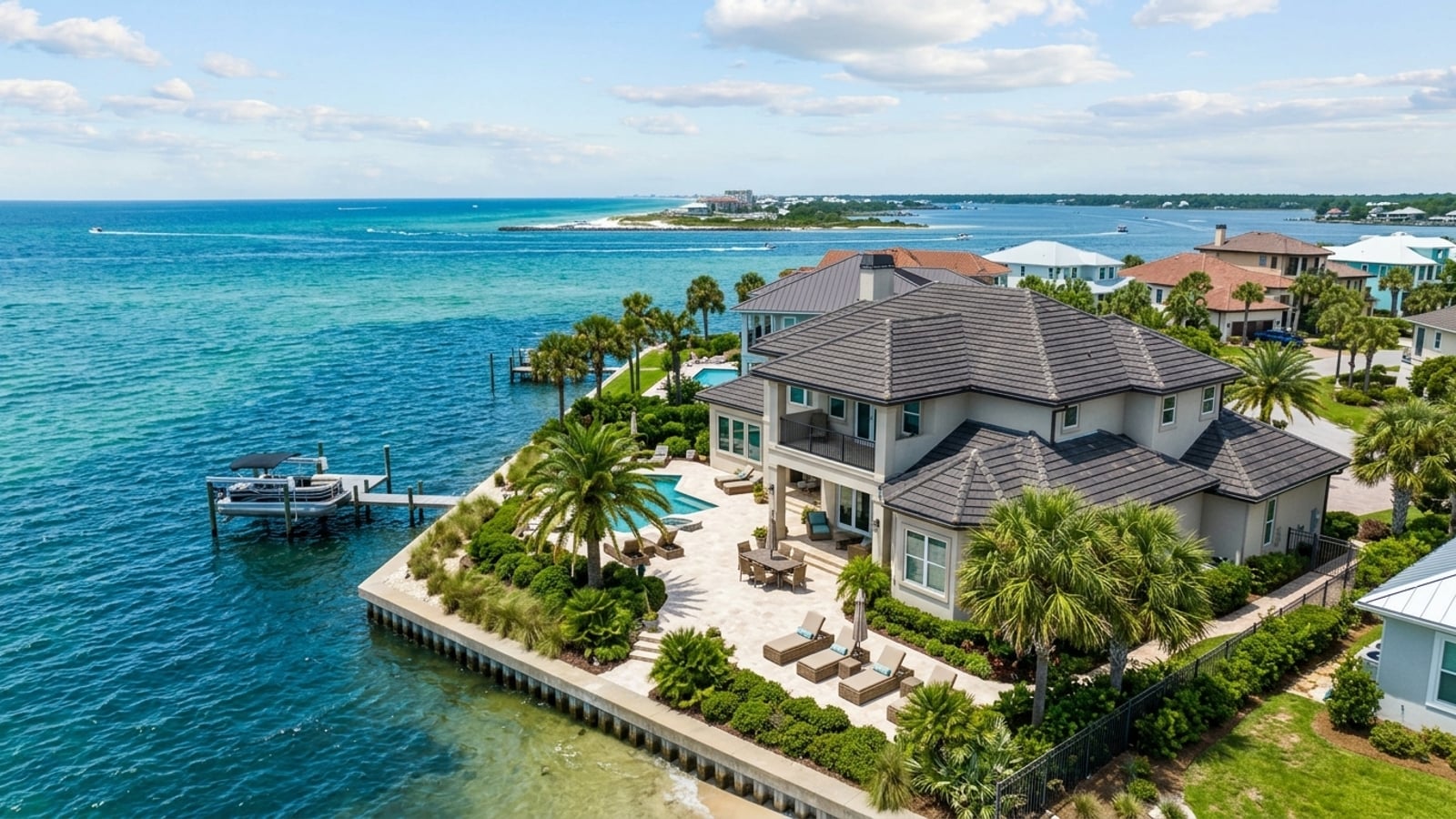
The median home price in Panama City Beach, FL, is around $362,000 - but waterfront estates and condos routinely command a significant premium over that number. Right now there are roughly 941 homes on the market, and the average time on market sits at 108 days. That's useful breathing room. You have time to do this right when buying a home in Panama City Beach, FL.
And doing it right matters, because purchasing a coastal home involves a lot more than locking in a great view. Insurance requirements are complex, permitting rules are specific, and the physical condition of shoreline structures can make or break a deal. Getting ahead of all that is what keeps your investment intact when the coast does what the coast always does.
Local Waterfront Options in Panama City Beach
Panama City Beach gives you more than one kind of waterfront to consider, and the differences between them are real. The Gulf of Mexico runs along the south side of the city - direct beach access, wide-open ocean views, and the full force of what comes with that. Head north or east and the picture changes: St. Andrews Bay and West Bay offer calmer water and protected shorelines that feel like an entirely different product.
On the east end, the Grand Lagoon - encompassing Upper and Lower Grand Lagoon - draws a lot of attention. Locals call it the "Gateway to the Gulf" because of how close it sits to St. Andrews State Park and Shell Island. And if you want something genuinely unusual, Lake Powell is worth a look. It's a large coastal dune lake that periodically connects to the Gulf - a rare ecological feature that not many markets can offer.
Choosing Your Ideal Setting
Gulf-front living puts you on the sand. It also puts you directly in the path of ocean breezes and salt spray, and your home will feel every bit of that exposure over time. Bayfront and lagoon-front properties sit in calmer, more sheltered environments with far less wave action - and that tends to make them much better suited for private docks, boat lifts, and seawalls.
Coastal dune lakes like Lake Powell are their own category: a rare mix of fresh and saltwater ecosystems that you won't find in most Florida markets. The type of water bordering your property shapes what you can do right from your backyard, so it's worth being honest with yourself about how you plan to use it.
Boating and Recreation Access
For most buyers in this market, water access is the whole point. Grand Lagoon is a favorite among serious boaters - you get sheltered conditions for your dock and a quick route to the open Gulf without long idle zones. Bayfront properties are excellent for inshore fishing, paddleboarding, and kayaking.
Before you fall in love with a property, map out the actual route from that dock to wherever you want to go. Bridge clearances and water depths along the way will determine what size vessel you can realistically keep there. Don't skip that step.
Rules for Buying Waterfront Land
Waterfront ownership comes with legal distinctions that most buyers don't think about until they're already under contract. In Florida, property boundaries along natural water bodies are typically defined by the mean high-water line - and because water levels shift with tides and erosion, your actual property line can move over time. That's not a hypothetical. It happens.
You'll also want to understand your water rights before you close. Riparian rights apply to properties on rivers and streams; littoral rights apply to properties bordering oceans, gulfs, or lakes. Both generally grant you access to the water, but neither means you own the water itself or the submerged land beneath it.
Zoning and Shoreline Permits
Want to build a dock, dredge, or repair a seawall? You're coordinating with multiple agencies. At the local level, the Bay County Planning and Zoning Division handles building and dock permits for unincorporated areas, working in coordination with the City of Panama City Beach for municipal permits.
The Florida Department of Environmental Protection (DEP) will also need to review most shoreline projects. Depending on the scope, you may need authorization from the U.S. Army Corps of Engineers as well. None of this is insurmountable, but none of it is fast either - plan accordingly.
Homeowner Association Regulations
A lot of waterfront neighborhoods layer HOA rules on top of all that. Associations frequently restrict the size, style, or color of private docks and boathouses in order to keep a uniform look along the canal or bay. Some prohibit certain types of watercraft, limit overnight mooring, or specify what materials you're allowed to use for shoreline stabilization.
Read those documents before you make an offer. Not after. HOA restrictions can meaningfully affect how you're able to use the property, and that's not a surprise you want at the closing table.
Inspecting the Property and Shoreline
A standard home inspection is not enough here. The coastal environment accelerates wear on everything - HVAC units, roofing materials, exterior hardware - at a rate that would surprise buyers coming from inland markets. You need inspectors who specialize in coastal homes and understand what salt, wind, and moisture do to a structure over time.
The shoreline itself deserves its own dedicated scrutiny. Erosion is relentless, and the structures built to hold the land in place are expensive when they fail.
Bulkheads, Seawalls, and Docks
Seawalls and bulkheads are your first line of defense against land loss and storm surge. An inspector should be looking at these carefully - cracks, leaning, signs of soil washout behind the wall. Any of those can signal a much larger problem.
Docks and boat lifts need the same attention. Wood pilings rot and attract marine borers. Metal components corrode quickly in the saltwater environment of the Gulf and St. Andrews Bay. These aren't minor maintenance items - replacement costs add up fast.
Water Quality and Depth
The depth of the water at your shoreline determines whether you can use it the way you're planning to. Tides in the Panhandle can leave shallow canals unnavigable at low tide, which matters quite a bit if you're counting on keeping a boat there.
Verify the depth at the dock during both high and low tides - not just one. And take a look at water flow while you're at it. Dead-end canals with poor circulation tend to accumulate debris, which is a quality-of-life issue that doesn't show up on a listing sheet.
Insurance and Ownership Costs
Before you get attached to a property, get an insurance quote. Homes exposed to the Gulf of Mexico or the local bays carry higher wind and water damage risk, and that shows up in your premiums. Request those quotes during due diligence, not after you've already fallen in love with the place.
Property taxes are the other number to run carefully. Bay County doesn't have a distinct waterfront surcharge, but waterfront homes carry higher assessed market values - which means higher tax bills. For the 2025-26 fiscal year, the total combined millage rate in Bay County was estimated at around 12.28 mills, including a countywide rate capped at 5.43 mills.
FEMA Flood Zones and Insurance
Most waterfront homes in Panama City Beach fall within designated FEMA flood zones. If you're buying in a high-risk zone - Zone V, which covers coastal areas subject to wave action, or Zone A - and you're carrying a mortgage, flood insurance isn't optional. Your lender will require it.
Standard homeowners insurance does not cover flood damage. Pull the property's current elevation certificate and check the latest FEMA flood maps before you make any assumptions about what your annual premium will look like.
Routine Maintenance Realities
Intense sun, high humidity, salt spray - the coast is hard on everything. Exterior paint fades faster. Metal fixtures corrode faster. Outdoor decking degrades faster. The pace of maintenance here is simply different from what you'd deal with inland, and your budget needs to reflect that.
Regular pressure washing, sealing, and rust prevention aren't optional extras - they're how you protect the home's value and keep small problems from turning into structural ones. Budget for it from day one.
Frequently Asked Questions
What are the hidden costs of buying a waterfront home in Panama City Beach?
Beyond the purchase price, you're looking at higher insurance premiums, specialized shoreline maintenance, and accelerated wear from salt and wind. Bay County doesn't levy a specific waterfront tax, but the higher assessed value of the land means larger property tax bills. You should also set aside money for dock and seawall repairs - those come up, and they're not cheap.
Do I need flood insurance for a waterfront property in Florida?
Yes, if your home is in a high-risk FEMA flood zone and you have a mortgage, your lender will require it. Even if you're paying cash, a separate flood policy is strongly advised - standard homeowners insurance does not cover rising water.
Who owns the water and shoreline in front of my Panama City Beach house?
You generally own the land up to the mean high-water line. The submerged land and the water itself are typically owned by the state of Florida. Your littoral or riparian rights give you access to the water, but you can't build or dredge without the proper permits in place.
What should I look for during a seawall and dock inspection in Panama City Beach?
On the seawall, you're looking for cracks, leaning, and soil erosion behind the wall. On the dock, check for rotting wood pilings, marine borer damage, and rusted metal hardware. Hire a specialized marine contractor to evaluate these structures - standard home inspectors often miss underwater defects entirely.
Gulf front vs. Grand Lagoon: Which waterfront location in PCB is better for boaters?
Grand Lagoon is generally the better choice for boaters. You get sheltered water for your dock and quick access to the Gulf of Mexico. Gulf-front properties deal with heavy wave action that makes private docks impractical - or outright impossible - to build directly on the beach.
What are the local rules for building or expanding a private dock in Panama City Beach?
You'll need permits from the Bay County Planning and Zoning Division and the Florida Department of Environmental Protection (DEP). Depending on the project's scope, approval from the U.S. Army Corps of Engineers may also be required. And if there's an HOA, their rules on dock size and style apply on top of all of that.
Check out this article next