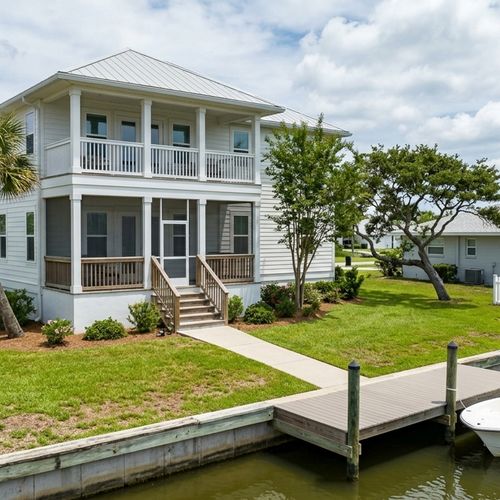

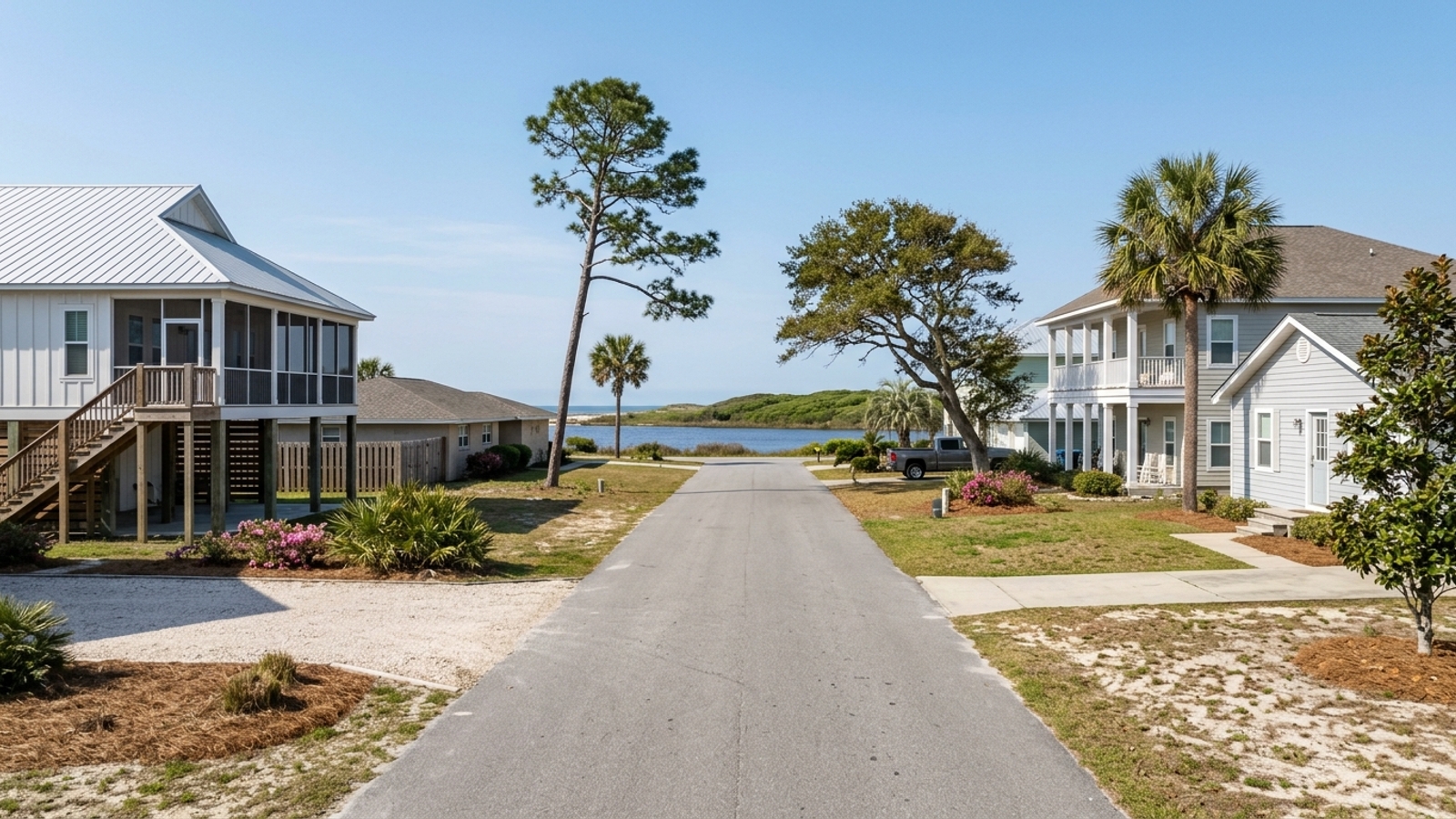
The median home price in Panama City Beach sits around $362,000, but the moment a property touches water, you're in a completely different conversation. When buying waterfront property in Panama City Beach, you have to make a real choice - calm dune lake, winding local creek, or direct Gulf access - and the right answer depends on your budget, your insurance tolerance, and how you plan to use the water.
With roughly 941 homes currently on the market and an average of 108 days on the market, you have time to think this through carefully. That's a good thing, because the structural and financial differences between these three property types are significant enough to matter long after closing day.
Waterfront Real Estate in Panama City Beach
Waterfront land in Panama City Beach averages roughly $1.29 million per acre - a number that reflects just how much Bay County buyers are willing to pay for water access. The local market breaks into three primary categories: lakefront, riverfront or creek-front, and oceanfront along the Gulf of Mexico.
Each type of water comes with its own ownership framework and building requirements. The distinction between littoral rights on a lake and riparian rights on a river isn't just legal trivia - it shapes what you can build, how you can use the shoreline, and what you're responsible for. Layer FEMA flood zones on top of that, and you start to see why waterfront purchases here require more due diligence than a standard residential transaction.
Lakefront Living: Freshwater and Coastal Dune Lakes
Lake Powell is one of the largest coastal dune lakes in the state, bordering Camp Helen State Park and the Gulf of Mexico. The area also includes upscale gated communities like Lake Merial and recognized subdivisions like Jamaican Lake. Jamaican Lake recently showed a median sale price of $488,250 and averages around $697 per square foot - numbers that tell you buyers are paying a real premium to be here.
Common Lakefront Home Styles
Homes on these freshwater and dune lakes typically feature private docks and outdoor spaces oriented toward non-motorized water activities. Littoral rights govern most of these parcels, dictating how owners can use the shoreline and the water immediately adjacent to their property.
Property taxes run consistent with the rest of the city - an effective rate of about 1.08% to 1.10%. The city itself levies 0.0000 mills, so the bulk of your tax burden comes from Bay County and local school district levies.
Pros and Cons of Lakefront Properties
The calmer water environment is the real draw here. You don't have the constant weathering that Gulf waves inflict on a structure, and the ecological setting - especially on a rare coastal dune lake like Lake Powell - is genuinely unlike anything else in the market.
The tradeoffs are real, though. Freshwater humidity and dock maintenance are ongoing costs, and buyers need to verify upfront whether a specific lake permits motorized boats or limits you to kayaks and paddleboards. That distinction matters more than most people realize until they own the property.
Riverfront and Creek Properties: Flowing Water and Riparian Rights
Crooked Creek and Burnt Mill Creek are the primary named waterways with residential development near Panama City Beach. The Rivercamps on Crooked Creek community offers lots averaging about 1.29 acres for roughly $335,000 - larger parcels than you'll typically find closer to the Gulf, with a price point that reflects it.
Ownership along these flowing waters means riparian rights, which grant you access to the water but attach specific responsibilities around the riverbed and shoreline. Seasonal water level fluctuations along these creeks deserve close attention before you buy.
Riverfront Property Characteristics
Erosion is a constant factor on Bay County creeks, and retaining walls aren't optional - they're how you protect your soil stability and prevent shoreline degradation over time. The architecture in these areas tends to blend into the natural wooded surroundings, with elevated living spaces built to account for seasonal flooding.
Docks here also need to be engineered differently than on a still lake. Moving current puts different stress on pilings and decking than calm water does, and that shows up in both construction cost and long-term upkeep.
Pros and Cons of Riverfront Homes
Privacy and access to winding waterways that eventually connect to larger bodies of water are the genuine advantages. Lot sizes like those in Rivercamps give you room to use the land.
The ongoing maintenance picture is harder, though. Erosion control, bulkhead upkeep, and variable water levels that affect boat draft clearances depending on season and recent rainfall - these are recurring costs that need to be factored into your budget from day one.
Oceanfront Homes: Gulf Tides and Coastal Architecture
Beachfront single-family homes in Panama City Beach average about $1,192 per square foot. The city's overall median sits at $329 per square foot. That gap tells you everything you need to know about what Gulf frontage costs. These properties sit directly on the Gulf of Mexico, primarily along Front Beach Road and near St. Andrews State Park, and they sit squarely in the path of saltwater, tidal changes, and coastal storms.
Coastal Home Construction Standards
Exterior materials here have to resist constant wind and saltwater spray - impact-resistant glass, specialized roofing tie-downs, and elevated pilings are standard, not upgrades. Builders aren't overbuilding; they're meeting local hurricane requirements.
Properties in high-risk FEMA V or VE zones face the most severe wave-action exposure of any category. Any modifications or new construction in those zones must comply with elevated base flood requirements, full stop.
Pros and Cons of Oceanfront Real Estate
Unobstructed Gulf views and immediate beach access are what buyers are paying for, and the short-term rental potential is real given the volume of tourist demand along this coast.
The maintenance costs are the highest of any waterfront type - saltwater corrosion and wind damage don't give you a break - and insurance premiums reflect that exposure. If you're buying oceanfront, you need to model the full annual cost of ownership before you fall in love with the view.
Maintenance and Insurance Costs for Water Access
Average homeowners insurance in Panama City Beach runs about $2,685 to $3,260 per year. Separate flood insurance policies commonly add another $500 to $2,000 annually, depending on the property's elevation and distance to the water. Those aren't small numbers, and they compound differently depending on which type of waterfront you're buying.
FEMA updated Bay County's flood maps in August 2024, pushing flood risk designations further inland than the previous 2009 maps. Current data shows properties spread across Zone X, Zone AE, Zone A, and the high-risk coastal VE and V zones. Where your specific property falls on those maps will shape your insurance requirements and costs more than almost any other single factor.
Saltwater Versus Freshwater Upkeep
Gulf saltwater accelerates rust and corrosion on metal fixtures, HVAC units, and exterior hardware at a pace that freshwater environments simply don't match. Oceanfront owners replace exterior components far more frequently than those living on Jamaican Lake or Crooked Creek - that's not a hypothetical, it's a maintenance schedule.
Freshwater and creek properties deal more with humidity, algae, and wood rot. Seawall, bulkhead, and dock maintenance are required across all water types, but the materials specified for Gulf-front bulkheads have to withstand heavy wave action in a way that creek-side installations don't.
Flood Insurance and Wind Coverage
Homes exposed to the Gulf or local bays carry higher risk for wind and water damage, and premiums reflect that. Properties mapped in V and VE zones typically require mandatory flood insurance if you're carrying a mortgage.
Specific rates vary by address, but the general pattern holds: oceanfront homes carry the highest combined wind and flood insurance costs, while lakefront and riverfront homes further inland - particularly those in Zone X - may face lower required coverages.
Frequently Asked Questions
Which type of waterfront property in Panama City Beach is the most expensive to maintain?
Oceanfront properties are the most expensive to maintain. Constant exposure to Gulf saltwater, high winds, and tidal wave action requires frequent replacement of exterior materials and hardware. These homes also carry the highest insurance premiums because of their location in high-risk coastal zones.
Do I need flood insurance for riverfront and lakefront homes in Panama City Beach?
It depends on the specific FEMA flood zone of the property. Oceanfront homes in V and VE zones almost always require it. Lakefront and riverfront homes mapped in high-risk A or AE zones will also need flood insurance if you have a mortgage. Properties in Zone X may not have a mandatory requirement, though lenders often recommend it regardless.
How does Gulf saltwater affect oceanfront home maintenance compared to freshwater in Panama City Beach?
Gulf saltwater rapidly accelerates corrosion on metal fixtures, HVAC systems, and exposed structural elements. Freshwater environments on lakes and creeks cause less corrosion but still require owners to manage humidity, wood rot, and algae growth on docks and retaining walls.
What are the rules for building a private boat dock on lakefront versus riverfront properties in Panama City Beach?
Dock construction depends on local zoning laws and the specific rights attached to the property - littoral rights on lakes, riparian rights on rivers. Buyers should consult Bay County zoning ordinances directly, as setback and building requirements vary based on the waterway and subdivision.
Are there stricter building codes for oceanfront homes due to Gulf tides compared to inland waterfront houses in PCB?
Yes. Oceanfront homes face stricter building codes because they sit in areas vulnerable to severe wave action and hurricane-force winds. Construction in coastal V and VE zones requires elevated structures, specialized tie-downs, and impact-resistant materials to meet local windstorm standards.
How do riparian rights dictate what I can do with the shoreline of a riverfront home in the Panama City Beach area?
Riparian rights grant riverfront owners access to the flowing water of creeks like Crooked Creek, but they don't typically grant ownership of the water itself. These rights dictate how you can use the shoreline, build docks, and manage retaining walls - without obstructing the natural flow or navigation of the waterway.
Check out this article next