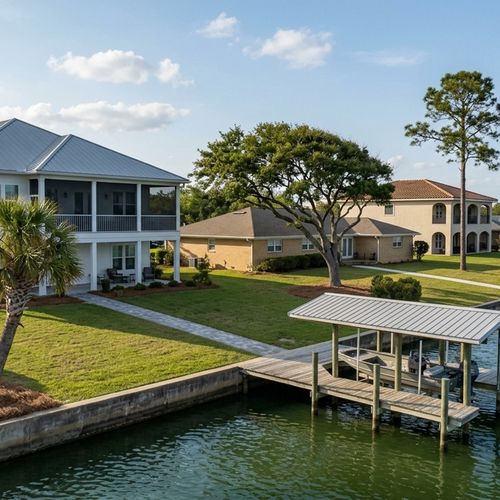

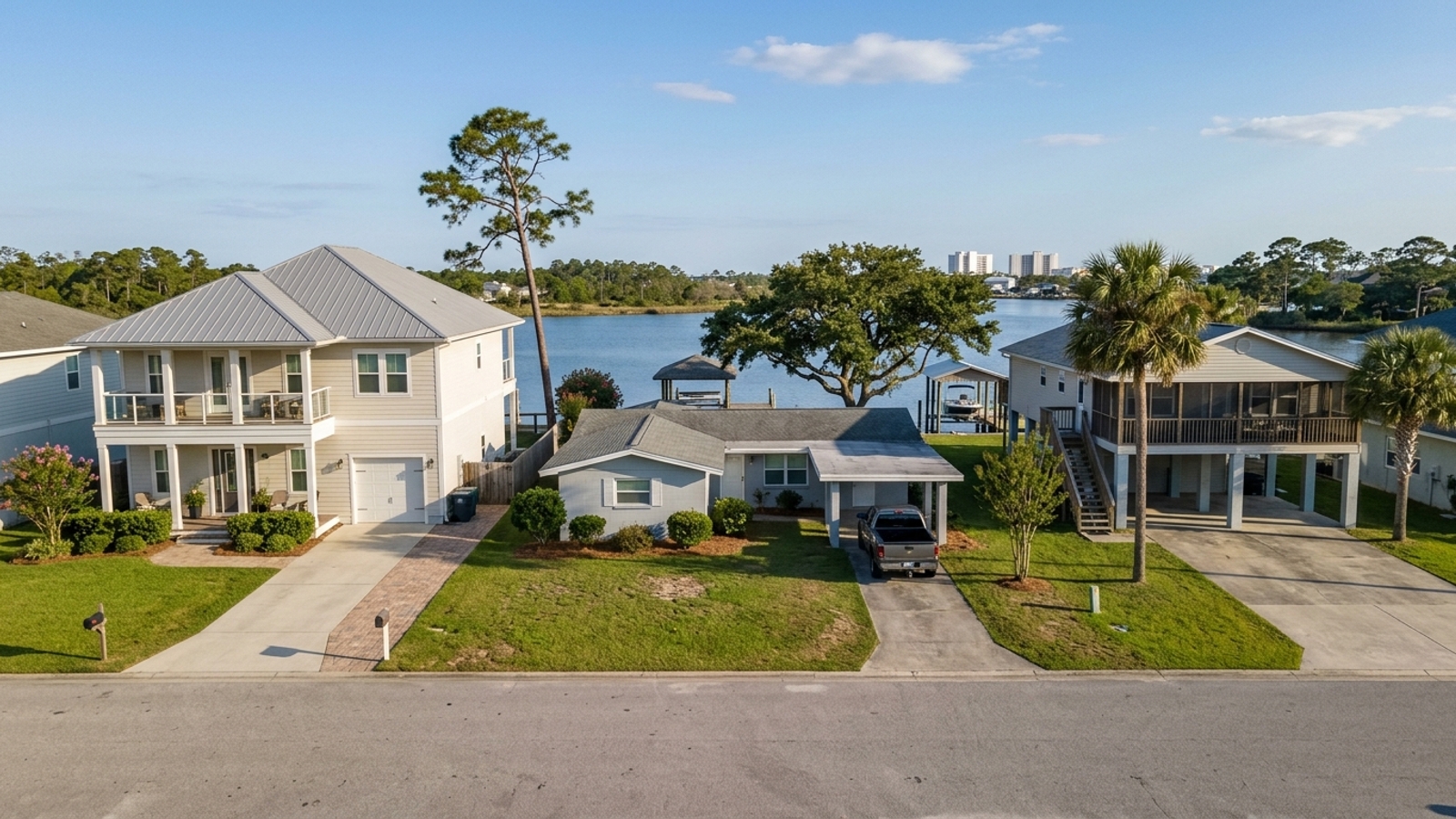
The median sale price in Panama City Beach, FL is right around $362,000, and with over 900 homes on the market right now, you've got real options. Homes are averaging 108 days on market, which means you have time to sit down and work through the full cost of buying waterfront property in Panama City Beach, FL before you put in an offer.
That's worth doing, because flood coverage is one of the biggest carrying costs on a coastal property - and it's one buyers routinely underestimate. Whether a home sits on the Gulf's 27-mile stretch, the calmer water of St. Andrew Bay and West Bay, or along the Grand Lagoon, the specific body of water and the home's elevation are what drive both the risk profile and the annual premium.
How FEMA Maps Flood Zones in Panama City Beach
FEMA assigns flood zones based on the statistical probability of flooding in a given year. Properties in Special Flood Hazard Areas (SFHA) face a 1% or greater annual chance of flooding - that's the threshold that triggers most of the rules you'll run into during a purchase.
In Bay County, these maps also establish the Base Flood Elevation (BFE), which is the height floodwaters are expected to reach during a severe storm. A home built below that elevation carries a higher risk profile, and your insurer will price it accordingly.
Reading the Local Flood Maps
FEMA updates its flood maps regularly to reflect changing coastal conditions and municipal mitigation work. You can pull up any address on the official FEMA map center or through the Bay County property appraiser's site to see exactly where a property lands.
The maps use letter designations: "V" zones cover coastal areas subject to wave action, while "A" zones cover inland areas where the risk is rising water rather than wave force. A Gulf-front home and a home tucked into Upper or Lower Grand Lagoon are going to read very differently on those maps.
Special Flood Hazard Areas (SFHA)
If a property falls inside an SFHA, it's classified high-risk - and that classification carries real consequences for building standards, insurance requirements, and what a lender will ask of you at closing.
X zones sit on the other end of the spectrum: moderate-to-low risk, lower statistical probability of flooding. That doesn't mean X-zone properties are immune - heavy rainfall and storm surges can still push water into those neighborhoods. It just means the mandatory requirements look different.
When Flood Coverage is Legally Required
Federal law requires flood insurance on any property in a Special Flood Hazard Area that's being financed through a federally backed mortgage. That covers conventional loans, FHA, and VA loans - which is most of what buyers use.
The lender will want proof of an active policy before they'll clear the loan to close. Coverage has to equal at least the outstanding principal balance on the loan or the maximum available through the National Flood Insurance Program (NFIP), whichever is less.
Rules for Federally Backed Mortgages
If any part of the main structure falls inside an A or V zone - even just a corner of the attached garage - the lender will require a policy. There's no partial exception here.
Lenders will also require an escrow account for flood insurance premiums, so the policy stays active year after year. This protects their collateral, and it protects you from a lapse you might not catch until you need coverage.
Why Cash Buyers Should Still Consider Coverage
Cash buyers make up a real portion of this market, and they're not legally required to carry flood insurance. But skipping it means the entire financial risk of water damage stays with you.
One inch of water can cause thousands of dollars in damage to flooring, drywall, and electrical systems. Even a property on the protected waters of West Bay isn't immune - storm surges can push water levels well above normal high tides.
Average Flood Insurance Premiums in Bay County
Statewide, the average annual NFIP premium in Florida runs approximately $1,363. In Bay County, the average risk-based NFIP premium comes in a bit lower - roughly $1,197 per year.
Part of the reason is Panama City Beach's standing in FEMA's Community Rating System (CRS). The city holds a Class 5 rating, which it achieved in late 2020. That classification earns residents a 25% discount on NFIP policies for properties inside the SFHA, and a 10% discount for those outside it. That's not nothing on an annual bill.
What Changes Your Annual Rate
Your specific premium lives and dies by the home's elevation relative to the Base Flood Elevation. A house on pilings ten feet above the BFE costs meaningfully less to insure than a slab-on-grade home built below it.
The age of the home and its construction type factor in too. Newer construction built to modern Bay County building codes tends to qualify for better rates than older structures that predate current standards.
Comparing NFIP and Private Policies
The NFIP is a federal program - standard coverage limits, rates set by FEMA, and guaranteed availability regardless of the home's claim history. Most waterfront buyers end up here for that last reason alone.
Private flood insurance is also worth pricing out. Private insurers can offer higher coverage limits than the NFIP, and for homes in certain moderate-risk zones, the rates are sometimes competitive. Pull quotes from both markets before you commit.
What a Standard Flood Policy Covers
Standard homeowners insurance excludes rising water damage entirely. That's why a separate flood policy isn't optional if you're buying near water - it covers a category of loss your homeowners policy won't touch.
The NFIP caps building coverage at $250,000 for residential properties. If you're looking at luxury waterfront homes in Panama City Beach, that ceiling may fall well short of replacement value, and you'd need supplemental private coverage to close the gap. You can also add up to $100,000 in personal property coverage for the contents inside the house.
Coverage for the House Structure
Building property coverage handles the physical structure - foundation, electrical and plumbing systems, central air conditioners, built-in appliances. Permanent fixtures like custom cabinets, paneling, and bookcases are included too. If water gets in, the policy pays to restore those structural elements to pre-flood condition.
Protecting Your Belongings
Personal property coverage is a separate line item covering furniture, clothing, electronics, and freestanding appliances. You have to opt into it and pay an additional premium - it doesn't come bundled with the building coverage automatically.
One limitation to know upfront: standard NFIP policies don't cover anything outside the main dwelling. Landscaping, decks, patios, seawalls, and boat docks are all excluded, regardless of what the storm does to them.
Steps to Take Before Buying a Waterfront Property
Your due diligence period is when you dig into the property's specific flood risk and historical insurance costs. With homes in Panama City Beach currently selling for about 95% of their list price, there's room to negotiate if the numbers you uncover warrant it.
Getting the right documents early keeps things from blowing up at the closing table. Your lender and insurance agent will both need specific forms to accurately price the policy.
Securing an Elevation Certificate
An Elevation Certificate is a formal document prepared by a licensed surveyor showing the exact elevation of the home's lowest floor relative to the estimated flood level. Your insurance agent uses it to calculate your premium, so it's not a step you can skip.
Ask the seller whether they already have a recent one on file. If they don't, bring in a local Bay County surveyor and get it done during your inspection period.
Requesting a CLUE Report
A CLUE report covers the past seven years of insurance claims filed on the property. Only the current homeowner can request it, so you'll need to ask the seller to pull it for you.
It tells you whether the home has flooded before and how much was paid out for repairs. Repeated flood claims are worth taking seriously - they can make the property difficult to insure on the private market down the line.
Frequently Asked Questions
Is flood insurance required for waterfront homes in Panama City Beach?
Yes, if you're using a federally backed mortgage to purchase a home in a Special Flood Hazard Area. Cash buyers aren't legally required to carry a policy, but given the coastal risks, purchasing one is recommended.
How much does flood insurance cost for a waterfront property in Florida?
The statewide average for an NFIP policy is approximately $1,363 per year. In Bay County, the average comes in at roughly $1,197 per year, partly because of the CRS discounts the city has earned.
What is the difference between NFIP and private flood insurance in Bay County?
The NFIP is a federal program that caps building coverage at $250,000, while private insurers often offer higher limits. Private policies may also cover external structures or temporary living expenses that the NFIP excludes.
How do I find out which flood zone a Panama City Beach house is in before making an offer?
Check the official FEMA map center or the Bay County property appraiser's website. Both will show you whether the home sits in a high-risk zone like an A or V zone.
Does flood insurance cover my boat dock, seawall, or landscaping on a waterfront property?
No. Standard NFIP policies exclude structures and features outside the main dwelling. Landscaping, seawalls, decks, and boat docks aren't covered if they're damaged by floodwaters.
Is there a waiting period before flood insurance takes effect when buying a home in Panama City Beach?
It depends on how you're buying. With a federally backed mortgage, the policy has to be active before the lender clears the loan to close, so coverage starts at closing. Cash buyers should ask their insurance agent about specific waiting periods when purchasing a voluntary policy.
Check out this article next