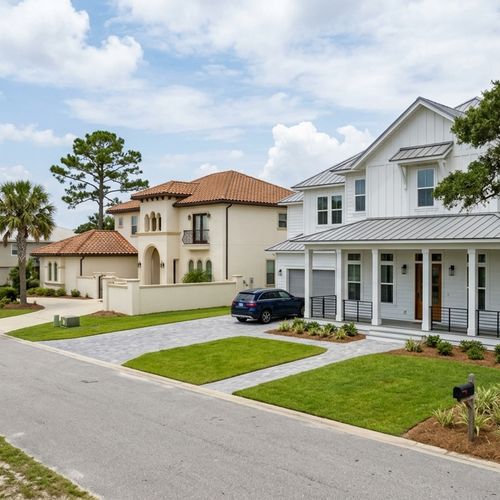

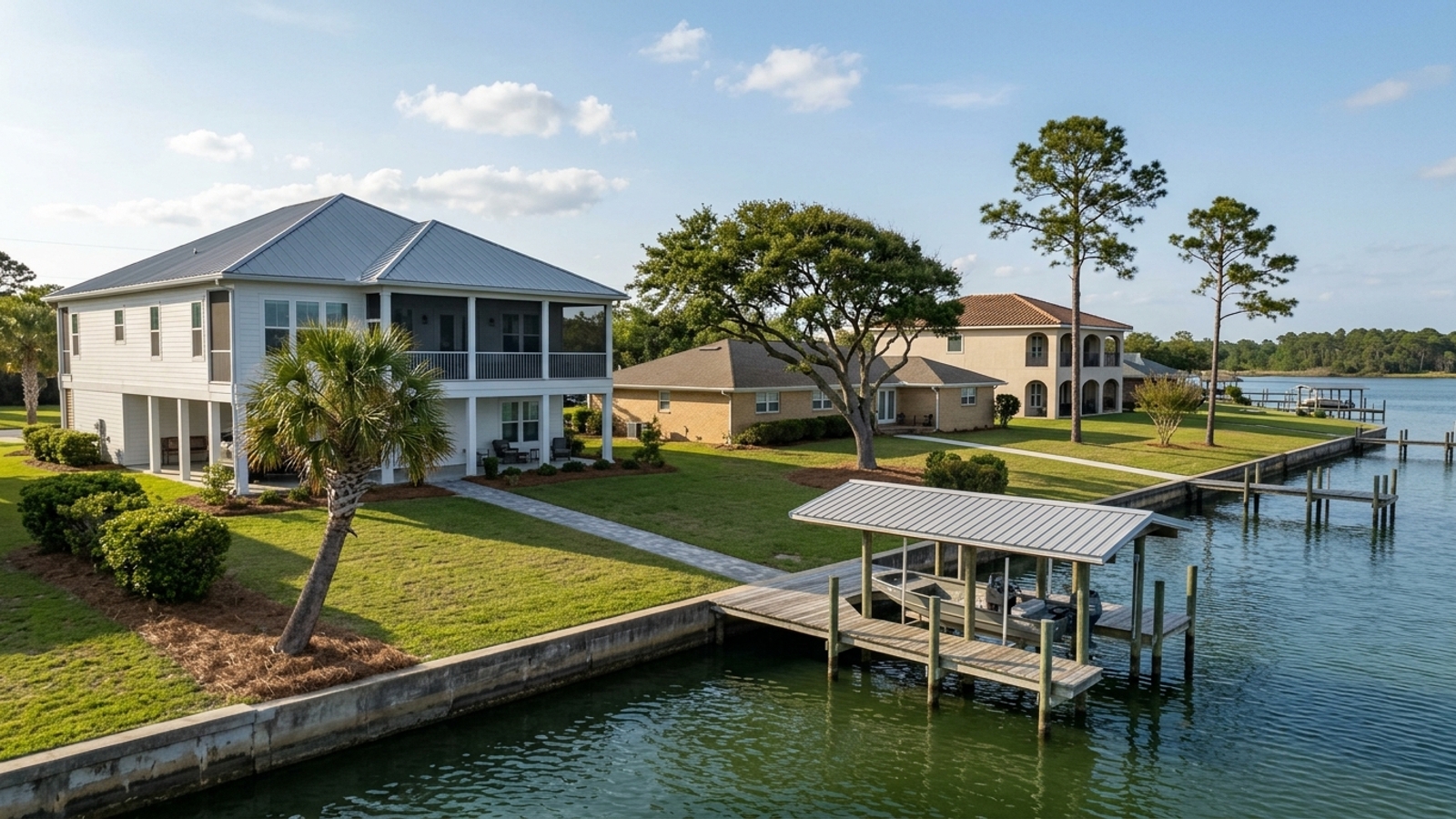
Panama City Beach, FL has an active market right now - homes are sitting about 108 days before selling, with a median price around $362,260. If you're looking at Gulf-front, Grand Lagoon, or St. Andrew Bay properties, you might assume that buying waterfront property in Panama City Beach means you own everything right out to the water's edge, maybe even beyond it.
That's not quite how Florida works.
The state applies specific rules that separate what you own on dry ground from what happens once you get to the water. Those rules determine whether you can build a boat lift, put in a seawall, or tell a stranger to get off the sand in front of your house. Worth knowing before you make an offer.
The Difference Between Riparian and Littoral Rights
Florida sorts water rights by the type of water body your property sits next to. The legal framework that applies to your lot - and the exact privileges it gives you - depends on the geography, not just the fact that there's water there.
The core distinction is simple: is the water flowing or standing? But the downstream details matter quite a bit.
Riparian Rights on Rivers and Streams
Riparian rights apply to land bordering flowing waterways - rivers and streams. You get the right to access the water for swimming, boating, and fishing.
What you don't get is ownership of the water itself. You share the right to use it with other riparian owners, and the rule is that your use can't unreasonably interfere with theirs.
Littoral Rights on the Gulf, Bays, and Lakes
Littoral rights cover properties that border standing or tidal waters - the Gulf of Mexico, St. Andrew Bay, local lakes. These guarantee you access to the water and an unobstructed view.
Same caveat as riparian: you don't own the water. Under Florida law, if a water body was considered navigable when Florida entered statehood in 1845, the submerged land beneath it belongs to the state, held in trust for the public. Small private ponds that were never navigable can remain under private ownership, but that's a narrow category.
Where Your Property Ends and Public Water Begins
On a waterfront lot, you can't just pound a stake in the ground and call it a property line. The legal boundary between your backyard and public space is tied to tidal data, and it can shift over time as natural forces reshape the shoreline.
The state has a precise legal standard for figuring out who owns what. That standard directly controls where you can build and where the public is legally allowed to walk.
Florida's Mean High Water Line Explained
For Gulf-front and tidal properties, Florida law uses the Mean High Water Line - the MHWL - as the legal boundary. It's calculated as the average height of high tide over a 19-year tidal epoch.
Land landward of the MHWL is yours. Land seaward of it belongs to the state and is open to the public. That's the line.
How Erosion and Accretion Change Boundaries
Beaches move, which means property lines can move with them. If sand builds up gradually through natural accretion, that new land becomes part of your private property. Gradual erosion works the other way and shrinks it. Sudden storm-driven changes - what the law calls avulsion - don't shift the MHWL legally, even if the beach looks completely different the next morning.
There's one more wrinkle. If the state designates an Erosion Control Line for a beach restoration project, that ECL becomes the fixed, permanent property boundary. Once the Trustees of the Internal Improvement Trust Fund accept it, natural sand movement no longer changes where your property ends.
Rules for Docks, Seawalls, and Water Access
Wanting to build a dock or seawall on a Bay County property means dealing with multiple layers of government oversight. You can't hire a contractor and start driving pilings without going through a permitting process first - and it's not a short one.
Since submerged lands belong to the state, building over them requires specific permissions. If you're buying a property with existing structures on or near the water, you'll want to confirm those structures were properly permitted before you close.
Permitting Requirements for Docks and Seawalls
Dock construction in Panama City Beach typically requires review at three levels. First, a construction permit from the county or city building department, which covers structural design, setbacks, and flood compliance - Bay County requires this for any new dock, seawall, or structural repair. Second, approval from the Florida Department of Environmental Protection. The FDEP offers exemptions for docks under 1,000 square feet (or 500 square feet in Outstanding Florida Waters), along with General or Individual Permits for larger projects. Third, the U.S. Army Corps of Engineers may also need to weigh in.
Three agencies. Plan accordingly.
Public Access Versus Private Ownership
You control the land down to the MHWL, but the public has every right to use the state-owned beach and water seaward of that line. Fencing off the wet sand or blocking boaters from navigating near your dock isn't something you can legally do.
The Panama City Beach Land Development Code adds its own requirements - structures often need to observe the greater of the FDEP setback line or a 25-foot minimum rear setback in certain overlay districts. The city code also expressly prohibits diving or jumping from any dock or pier into the Gulf of Mexico.
Drawing Water for Irrigation
If you're thinking about pumping water from an adjacent lake or canal for lawn irrigation, the answer depends on whether that water body is privately owned and what the Northwest Florida Water Management District allows. Pulling water from a navigable, state-owned body often requires a consumptive use permit. Check with the district before you install anything.
Steps to Verify Water Rights Before Closing
A lot of buyers assume waterfront access comes automatically with the deed. It doesn't always, and the due diligence period is the right time to find out exactly what you're getting.
With about 941 homes currently available in the local market, you have options. There's no reason to rush past the legal details when there's inventory to choose from.
Reviewing the Title and Deed
A standard title search will surface deed restrictions, easements, and shared access agreements tied to the property. Some neighborhoods have community boat ramps or shared docks that limit what individual owners can build on their own lots.
Read the legal description carefully - specifically whether it references the water's edge or a surveyed line. Title insurance policies often contain exceptions for riparian or littoral rights, which means the title company isn't guaranteeing your water access. That's worth asking about directly.
Checking With Bay County Authorities
Contact the Panama City Beach Planning and Zoning Department to confirm whether a specific parcel - say, one on Grand Lagoon - falls inside city limits or under unincorporated Bay County jurisdiction. That distinction determines which local building codes govern your setbacks.
Also pull the permit history for any existing docks or seawalls. If a previous owner built without FDEP or county approval, you could inherit the fines or be required to remove the structure. That's not a hypothetical risk.
Working With a Local Real Estate Specialist
Waterfront transactions have moving parts that a standard inland sale doesn't. An agent with real coastal experience knows which agencies to call, which questions to ask the seller, and how to read a permit history.
They can also help you track down historical surveys and connect you with marine contractors who can assess the condition of existing seawalls - so you go into closing knowing the actual cost of maintaining what you're buying.
Frequently Asked Questions
Do I own the water in front of my waterfront property in Panama City Beach?
No. Under Florida law, if the water body was navigable in 1845, the state holds the submerged lands and the water in trust for the public. You own the land down to the Mean High Water Line and have specific rights to access and use the water - but not ownership of the water itself.
What is the difference between riparian and littoral rights in Florida?
Riparian rights apply to properties bordering flowing water, like rivers and streams. Littoral rights apply to properties on standing or tidal waters, such as the Gulf of Mexico, St. Andrew Bay, and lakes. Both grant access and usage rights, but the terms apply to different types of water bodies.
Can I build a dock on my waterfront property in Bay County?
It depends on the specific property and what permits you can obtain. You'll need a construction permit from the county or city, approval from the Florida Department of Environmental Protection, and potentially clearance from the U.S. Army Corps of Engineers.
How do I verify the deeded water rights of a Panama City Beach home before making an offer?
Start with a thorough title search to check for easements, deed restrictions, and shared access agreements. Review the property's legal description and consult with the Panama City Beach Planning and Zoning Department to clarify your specific rights.
Can the general public legally sit or walk on the sand directly in front of my Gulf-front house in Panama City Beach?
Yes. The public can use the beach seaward of the Mean High Water Line. That area is state-owned public land, and you can't restrict access to it.
What happens if a neighboring property's seawall or dock encroaches on my waterfront property lines?
You'll need to resolve it through a professional survey and potentially legal action. Unpermitted encroachments may violate Bay County building codes or FDEP regulations, which could require the neighbor to modify or remove the structure.
Check out this article next